Request for Proposal for Video Production: 2026 Guide
Discover how to create an effective request for proposal for video production. Ensure clear expectations and protect your budget with our 2026 guide!

A request for proposal for video production is a formal document that communicates your project requirements to potential vendors so they can submit accurate, comparable, and relevant bids. Without one, you get wildly inconsistent quotes, creative misalignment, and budget surprises that derail projects before filming even starts. A well-built video production RFP sets the terms of engagement upfront. It protects your budget, clarifies expectations, and gives qualified vendors everything they need to propose solutions that actually fit your goals.
What to include in your video production RFP
An effective video production RFP must cover ten essential sections: company overview, project goals, target audience, video type, creative direction, timeline, budget range, deliverables, distribution plan, and approval process. Each section serves a specific function. Skip one, and vendors fill the gap with assumptions that cost you money later.
Company overview and project goals
Start with a concise company overview. Two to three sentences on what your organization does and where this video fits into your broader marketing or communications strategy. Follow that with specific, measurable project goals. "Increase product demo requests by 20% among mid-market SaaS buyers" is far more useful to a vendor than "raise brand awareness."

Target audience and distribution channels
Name your audience explicitly. Specify demographics, industry, job title, and where they will watch the video, whether that is LinkedIn, a product landing page, a trade show screen, or a sales email sequence. Distribution channel affects every creative decision, from aspect ratio to pacing to caption requirements.
Scope of work and deliverables
Break the scope into three phases: pre-production (scripting, storyboarding, location scouting), production (filming days, talent, equipment), and post-production (editing, color grading, sound design, motion graphics). Then list your deliverables precisely.
- Number of final video versions (full length, 30-second cut, 15-second social cut)
- File formats required (MP4, MOV, ProRes)
- Subtitle and caption files
- Raw footage ownership terms
- Thumbnail and still images if needed
Pro Tip: Include visual reference examples of the tone and style you want. Reference films reduce creative misalignment far more effectively than long text descriptions.
Timeline, budget, and approval workflow
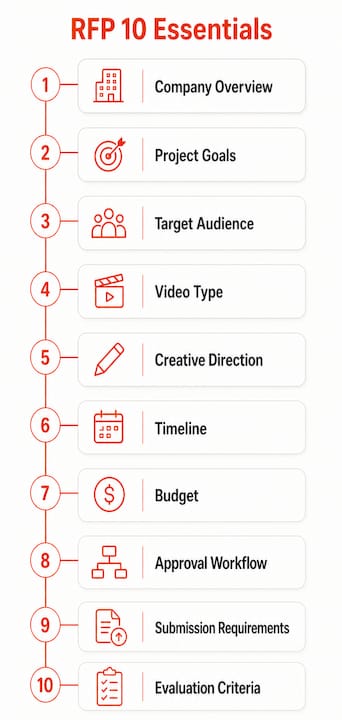
State your go-live date and work backward to set milestone deadlines for script approval, shoot dates, and first cut delivery. Disclose your budget range. Without budget disclosure, quotes for the same brief can range from $5,000 to $50,000. That spread makes comparison impossible and wastes everyone's time.
Document your approval workflow explicitly. List every stakeholder who must sign off at each stage and how many rounds of revisions are included. Undisclosed multi-round approvals are one of the top drivers of budget overruns and timeline delays. Vendors price for what you tell them. If you have five internal reviewers and three revision rounds, say so upfront.
Finally, include submission requirements: deadline, preferred file format for proposals, contact name, and any mandatory questions you want answered.
How to evaluate video production proposals effectively
Evaluation starts before you read a single proposal. Set your scoring criteria and share them with vendors when you send the RFP. Sharing evaluation weights upfront focuses proposals on what matters and cuts boilerplate content. A practical starting point is 60% price, 20% experience, and 20% timeline, adjusted based on your project's risk profile.
Weighting criteria by project risk
For first-time vendor partnerships, weight portfolio depth and process transparency heavily. You need evidence that this team has delivered comparable work on time and on budget. For longer-term relationships where you already trust the vendor's process, shift weight toward pricing clarity and strategic alignment.
Reject any proposal that offers a generic scope without asking about your business goals. Vendors who skip discovery typically increase budget creep and deadline risk. Low bids that exclude planning, revisions, and usage rights are not bargains. They are future disputes.
Recognizing red flags and deal-breakers
A strong production company will ask about your business goals first, not just your creative preferences. That question signals strategic thinking. It tells you the vendor sees video as a business tool, not just an art project. Prioritize vendors who think this way.
Deal-breaker criteria such as a missing revision policy or unclear ownership terms should override your scorecard entirely. No matter how strong a portfolio looks, a vendor who cannot clearly state what you own after delivery is a liability. Identify these disqualifiers before scoring begins so they cannot be buried by strong marks in other categories.
Conduct follow-up discovery calls with your top two or three candidates. Ask each one to walk you through their production process for a project similar to yours. The quality of that conversation tells you more than any written proposal.
Common mistakes to avoid when writing your video RFP
Most video production RFP failures trace back to a short list of avoidable errors. Catching them before you send the document saves weeks of back-and-forth and prevents the vague, non-comparable proposals that make vendor selection a guessing game.
- Omitting the approval process. Not listing stakeholders and review rounds leads to surprise charges. Vendors cannot price accurately for a workflow they do not know exists.
- Hiding your budget. Vendors who do not know your range cannot suggest the right balance of live filming versus stock footage. You get proposals that are either over-engineered or underbuilt.
- Vague deliverable descriptions. "A video" is not a deliverable. Specify length, format, number of cuts, and intended platform for each asset.
- Skipping intellectual property terms. Failing to clarify who owns the footage, music licenses, and final files creates disputes after delivery. State ownership expectations in the RFP, not the contract.
- Ignoring the discovery phase. Sending an RFP without any vendor conversation produces generic quotes. A brief pre-RFP call with shortlisted vendors sharpens your own brief and improves proposal quality.
- Missing submission instructions. Unclear submission requirements produce incomplete proposals and slow your review process. Specify format, deadline, and the exact questions you need answered.
- Sending the RFP too late. Quality production companies book out weeks in advance. A realistic timeline builds in at least two to three weeks for proposal review before your intended shoot date.
- Overloading with company history. Two paragraphs of company background is enough. Vendors need context, not a corporate history lesson.
Pro Tip: Before sending, have a colleague read your RFP and list every assumption they had to make. Each assumption is a gap that will produce inconsistent proposals.
How to manage the submission and vendor selection process
A structured selection process produces better decisions and protects you if a vendor later disputes the outcome. Follow these steps after your RFP goes out.
- Set a single point of contact. All vendor questions route through one person. This prevents inconsistent answers and keeps your evaluation fair.
- Standardize submission format. Require all proposals to follow the same structure: executive summary, scope of work, timeline, pricing breakdown, team bios, and portfolio samples. Standardization makes side-by-side comparison fast and objective.
- Use a weighted scorecard. Score each proposal against your published criteria. Weighted scoring keeps evaluation consistent and prevents a single impressive portfolio from overriding weak pricing or unclear terms.
- Interview your top candidates. A 30-minute discovery call with your top two or three finalists reveals communication style, responsiveness, and whether the team actually understands your goals.
- Negotiate before signing. Confirm pricing transparency, revision rounds, delivery milestones, and ownership terms in writing before the contract is drafted.
- Document your decision. Record scores, notes, and the rationale for your final choice. This protects you if a rejected vendor asks for feedback and gives you a reference point for future RFPs.
- Set a realistic kickoff date. Build at least one week between contract signing and project kickoff. That buffer allows the vendor to prepare properly and prevents a rushed start from compressing the production schedule.
The table below shows a sample scoring framework for a mid-budget video production RFP.
| Criterion | Weight | What to assess |
|---|---|---|
| Pricing clarity | 40% | Itemized breakdown, revision costs, ownership fees |
| Portfolio relevance | 30% | Work in your industry or similar format |
| Timeline feasibility | 20% | Milestone plan matches your go-live date |
| Team and process | 10% | Named team members, clear production workflow |
Key Takeaways
A video production RFP that discloses budget, approval workflows, and evaluation criteria produces accurate, comparable proposals and prevents the budget overruns that derail most video projects.
| Point | Details |
|---|---|
| Disclose your budget range | Vendors cannot propose realistic creative approaches without knowing your financial parameters. |
| Document the approval workflow | List every stakeholder and revision round to prevent surprise charges during post-production. |
| Share evaluation criteria upfront | Publishing your scoring weights focuses proposals and eliminates irrelevant boilerplate content. |
| Reject generic proposals | Vendors who skip discovery and business goal questions increase budget creep and deadline risk. |
| Use a weighted scorecard | Structured scoring keeps vendor selection objective and defensible across your team. |
Why most video RFPs fail before the shoot starts
I have reviewed a lot of video production RFPs, and the pattern is consistent. The document looks thorough on the surface. It has a project description, a deadline, and a request for pricing. What it almost never has is a clear approval workflow, a disclosed budget range, or any indication of what "success" actually means for the project.
The result is predictable. Vendors submit proposals that range from $8,000 to $80,000 for the same brief. The project manager picks the middle bid, the internal review process turns out to involve six people across three departments, and the vendor hits the client with change orders by week three.
The fix is not a longer RFP. It is a more honest one. Tell vendors what you can spend. Tell them who approves what and how many times. Tell them what a successful video looks like in terms of business outcomes, not just aesthetics. A vendor worth hiring will respond to that information with a proposal that actually solves your problem.
The other thing I have learned is that the best vendors ask hard questions before they write a single line of their proposal. If a production company responds to your video production services request with a quote and no questions, that is a warning sign. The right partner wants to understand your audience, your distribution plan, and what happens after the video goes live. That curiosity is what separates a vendor who makes videos from one who moves your business forward.
— Cody
Build your next video production RFP with Swarm-stack
Writing a thorough video production RFP takes time, alignment across your team, and the ability to pressure-test every section before it goes to vendors.
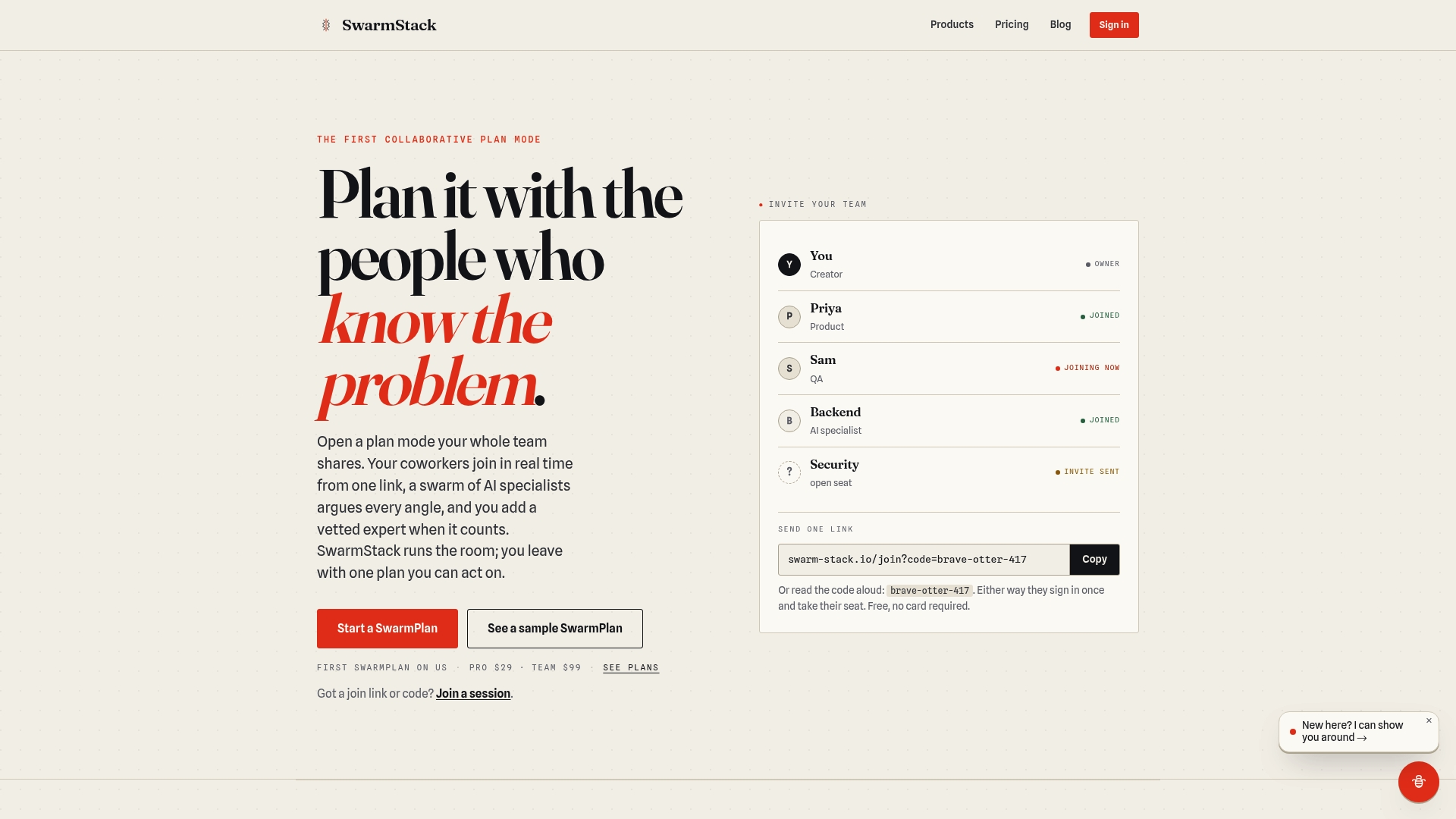
Swarm-stack brings together human experts and AI specialists in real-time collaborative sessions to build RFPs that are detailed, consistent, and ready to send. Teams invite colleagues through a single link, work through each section together, and produce a final document with clear deliverables, defined evaluation criteria, and no gaps for vendors to exploit. The Swarm-stack platform handles the structure so your team can focus on the decisions that matter. For project managers who need to move fast without sacrificing quality, that combination makes a real difference.
FAQ
What is a request for proposal for video production?
A request for proposal for video production is a formal document that outlines your project goals, scope, timeline, budget, and evaluation criteria so qualified vendors can submit tailored, comparable bids.
What sections should a video production RFP include?
An effective RFP covers company overview, project goals, target audience, video type, creative direction, timeline, budget range, deliverables, distribution plan, and the approval process.
Should I disclose my budget in a video production RFP?
Yes. Disclosing a budget range enables vendors to propose realistic creative approaches and prevents quotes that vary by tens of thousands of dollars for the same brief.
How do I evaluate video production bids fairly?
Use a weighted scorecard with published criteria. A practical starting point is 60% price, 20% experience, and 20% timeline, adjusted for your project's risk level and vendor relationship history.
What are the biggest red flags in a video production proposal?
Missing revision policies, unclear ownership terms, and generic scopes submitted without any discovery questions are the top disqualifiers. These issues override strong portfolio scores and predict future disputes.