RFP Response Software: A 2026 Guide for Teams
Discover how rfp response software streamlines proposal creation, boosts efficiency, and improves accuracy, helping teams win more business.

RFP response software is a specialized tool that automates proposal creation by assembling compliant, on-brand responses from approved content libraries. Teams that manage growing volumes of proposals with email threads and shared drives consistently hit the same wall: version conflicts, missed deadlines, and responses that read like they were written by three different people. The right proposal management software fixes all three problems at once. It replaces manual copy-paste workflows with governed content, AI-assisted drafting, and real-time collaboration, turning a reactive scramble into a repeatable process that wins more business.
How does RFP response software improve efficiency and accuracy?
Automation tools transition proposal teams from manual document factories into strategic revenue drivers. That shift happens because the software removes the two biggest time drains in any RFP process: hunting for approved content and reformatting documents by hand.
The core efficiency gains come from several specific mechanisms:
- Automated document assembly. The software pulls from pre-approved templates and content blocks, so teams never start from a blank page. Responses stay on-brand and compliant without a manual review of every sentence.
- Elimination of copy-paste errors. Manual workflows using email and shared drives cause delays and inconsistent responses. Centralized content removes that risk entirely.
- AI-powered answer suggestions. When a new RFP arrives, the system scans the document and surfaces the most relevant pre-approved answers. Writers spend time refining, not searching.
- Version control built into the workflow. Every edit is tracked. Reviewers see the current draft, not a stale attachment from last Tuesday's email chain.
- CRM and data integration. RFP automation software integrates CRM and business data to personalize responses and enforce compliance at scale. A proposal for a healthcare client automatically pulls the right certifications and case studies.
Pro Tip: Set up content expiration dates inside your content library. Answers that haven't been reviewed in 90 days should flag for re-approval before the system suggests them in a new proposal.
What key features should teams look for in RFP response software?

The best RFP response management software does more than store old answers. It governs them. Governed content means stored information is vetted, searchable, and approved, rather than simply amassed in a large document store. That distinction separates software that helps from software that just adds another place to lose files.
Teams should evaluate any platform against these core capabilities:
- Centralized, searchable content library. Every approved answer, case study, and compliance statement lives in one place. Search must work by topic, tag, and keyword, not just file name.
- Role-based access and content governance. Not everyone should be able to edit a compliance statement. Governance controls who can approve, edit, or only view specific content blocks.
- Cross-functional collaboration tools. Subject matter experts, legal reviewers, and sales writers need to work on the same document simultaneously. Comment threads, task assignments, and real-time editing are non-negotiable.
- Automated formatting and branding. The software applies the correct fonts, colors, and layouts automatically. A proposal going to a government agency looks different from one going to a startup, and the system handles that without manual reformatting.
- Dashboards and analytics. Visibility into ownership, deadlines, and proposal progress helps managers resolve bottlenecks before they become missed submissions. Analytics also show which content blocks appear most often in winning proposals.
The analytics feature is frequently underused. Teams that review win/loss data by content block can systematically improve their answer library over time, not just their individual proposals.
How does AI integration transform the RFP response process?
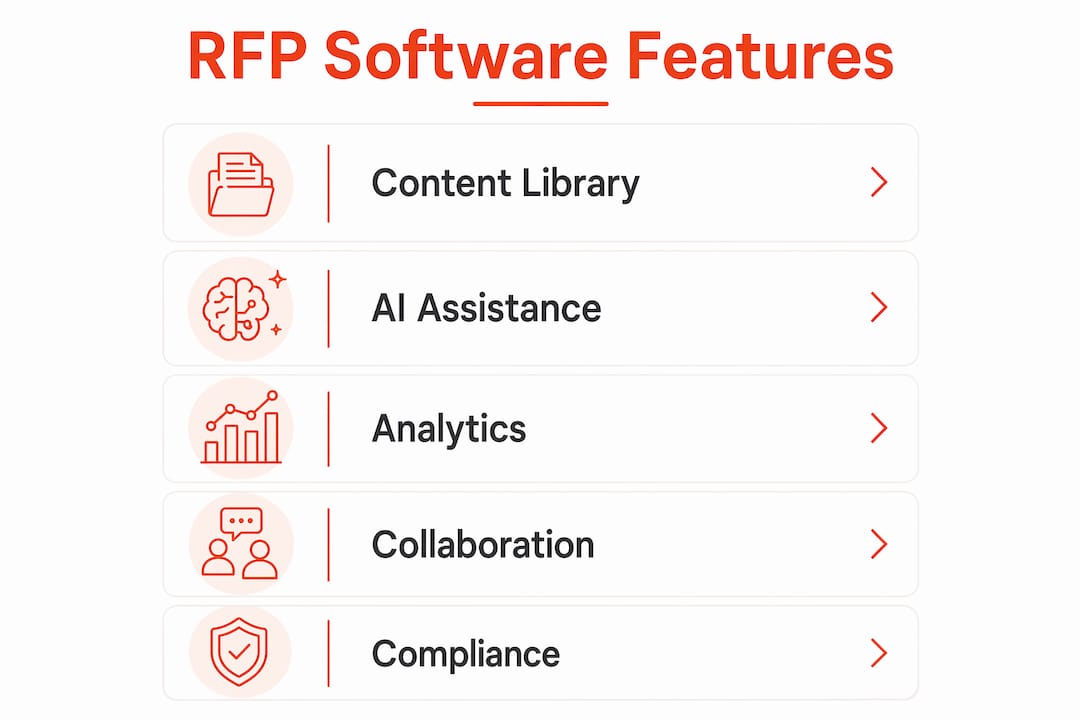
AI for RFP responses goes well beyond auto-fill. Modern platforms use AI to understand the full context of an incoming document, not just match keywords to stored answers.
Here is how AI changes the process at each stage:
- Instant document ingestion. AI-driven platforms process entire RFP documents immediately, identifying every requirement, question, and evaluation criterion. A 200-page government RFP that would take a team two days to parse gets mapped in minutes.
- Draft generation from past wins. The AI generates proposal drafts modeled on successful past bids. It does not just copy old text. It adapts structure and emphasis to match the new client's stated priorities.
- Predictive question preparation. The system anticipates questions the client is likely to ask based on their industry, the RFP structure, and historical patterns. Teams can prepare answers before the clarification period even opens.
- Compliance checking. AI scans the draft against the RFP's stated requirements and flags gaps before submission. Missing a mandatory section is one of the most common reasons proposals get disqualified.
The critical limitation of public AI tools in this context is well documented. Enterprise AI must use only trusted internal content sources to avoid compliance risks and inaccuracies. A general-purpose AI tool has no access to your approved legal language, your current certifications, or your vetted pricing. It will hallucinate plausible-sounding answers that can expose your organization to liability.
Pro Tip: Before deploying any AI RFP response generator, audit your content library first. AI is only as accurate as the content it draws from. Garbage in, garbage out applies here more than anywhere else.
Swarm-stack addresses this directly. Its structured sessions integrate multiple AI specialists alongside human experts, so every generated section gets argued from multiple angles before it becomes part of the final deliverable. Teams can learn more about how this works through the SwarmRFP overview.
What practical steps help businesses implement RFP response software?
Buying the software is the easy part. Getting your team to use it consistently, and measuring whether it actually improves outcomes, requires a deliberate implementation plan.
Successful adoption includes standardizing response structures, training teams on workflows, and measuring impact on turnaround and win rates. Teams that skip any of those three steps typically revert to old habits within a quarter.
Start with an honest assessment of your current process. Map how many RFPs your team responds to each month, how long each response takes, and where the delays consistently occur. If the bottleneck is legal review, no amount of AI drafting will fix it without also addressing the review workflow.
Prioritize features based on your actual pain points. A team of five responding to 10 RFPs per month needs a different feature set than an enterprise team handling 200. Entry-level platforms offer content libraries and basic templates. Enterprise platforms add AI drafting, deep integrations, advanced analytics, and governance controls. Match the tool to the volume and complexity of your work.
Standardize before you automate. Build your template library and content blocks before you turn on AI suggestions. Teams that automate a chaotic process just produce chaotic proposals faster.
Train cross-functional teams together. Sales writers, subject matter experts, and legal reviewers all use the software differently. Training them separately creates siloed workflows. A joint session where everyone practices on a real RFP reveals integration gaps that individual training misses.
Measure the right metrics from day one. Track turnaround time per proposal, the percentage of content reused from the library, and your win rate by proposal type. Those three numbers tell you whether the software is delivering value or just adding another tool to manage.
Swarm-stack's approach to data privacy and compliance makes it a practical choice for teams that need governance built into the platform from the start, not bolted on later.
Key takeaways
RFP response software delivers the most value when governed content, AI assistance, and cross-functional collaboration work together inside a single platform.
| Point | Details |
|---|---|
| Governed content beats volume | Vetted, searchable answers outperform large unmanaged document stores every time. |
| AI requires clean source content | AI drafting tools are only as accurate as the approved content library they draw from. |
| Analytics drive continuous improvement | Tracking which content blocks appear in winning proposals improves the library over time. |
| Implementation needs a plan | Standardize templates and train teams together before activating automation features. |
| Measure turnaround and win rates | These two metrics confirm whether the software is generating real business value. |
Why content governance matters more than AI features
Most teams shopping for RFP response software focus on the AI capabilities first. I understand why. The demos are impressive, and the promise of a near-finished proposal draft in minutes is genuinely compelling. But after watching teams adopt these tools, the ones that see lasting results are not the ones with the most advanced AI. They are the ones with the most disciplined content governance.
The pattern I see repeatedly is this: a team buys a platform with strong AI features, loads in a few hundred old proposals, and turns on the auto-suggest. Six months later, the AI is confidently recommending outdated pricing, expired certifications, and case studies from clients who have since churned. The problem was never the AI. The problem was that no one owned the content library.
The teams that win consistently treat their content library like a product. Someone is responsible for it. Answers have expiration dates. New wins get debriefed and added within a week. That discipline is harder to build than any software feature, and it is the actual competitive advantage.
Public AI tools are a related trap. They feel productive because they generate text quickly. But they have no access to your internal knowledge, your compliance requirements, or your client history. The output sounds authoritative and is often wrong in ways that are hard to catch without deep subject matter expertise.
The future of RFP response automation is not replacing human judgment. It is giving human experts better tools to apply their judgment faster. The software handles the assembly. The experts handle the strategy. That division of labor is where the real efficiency gains live.
— Cody
How Swarm-stack accelerates your RFP responses
Teams that want to move from manual proposal chaos to a governed, AI-assisted workflow have a clear path forward with Swarm-stack.
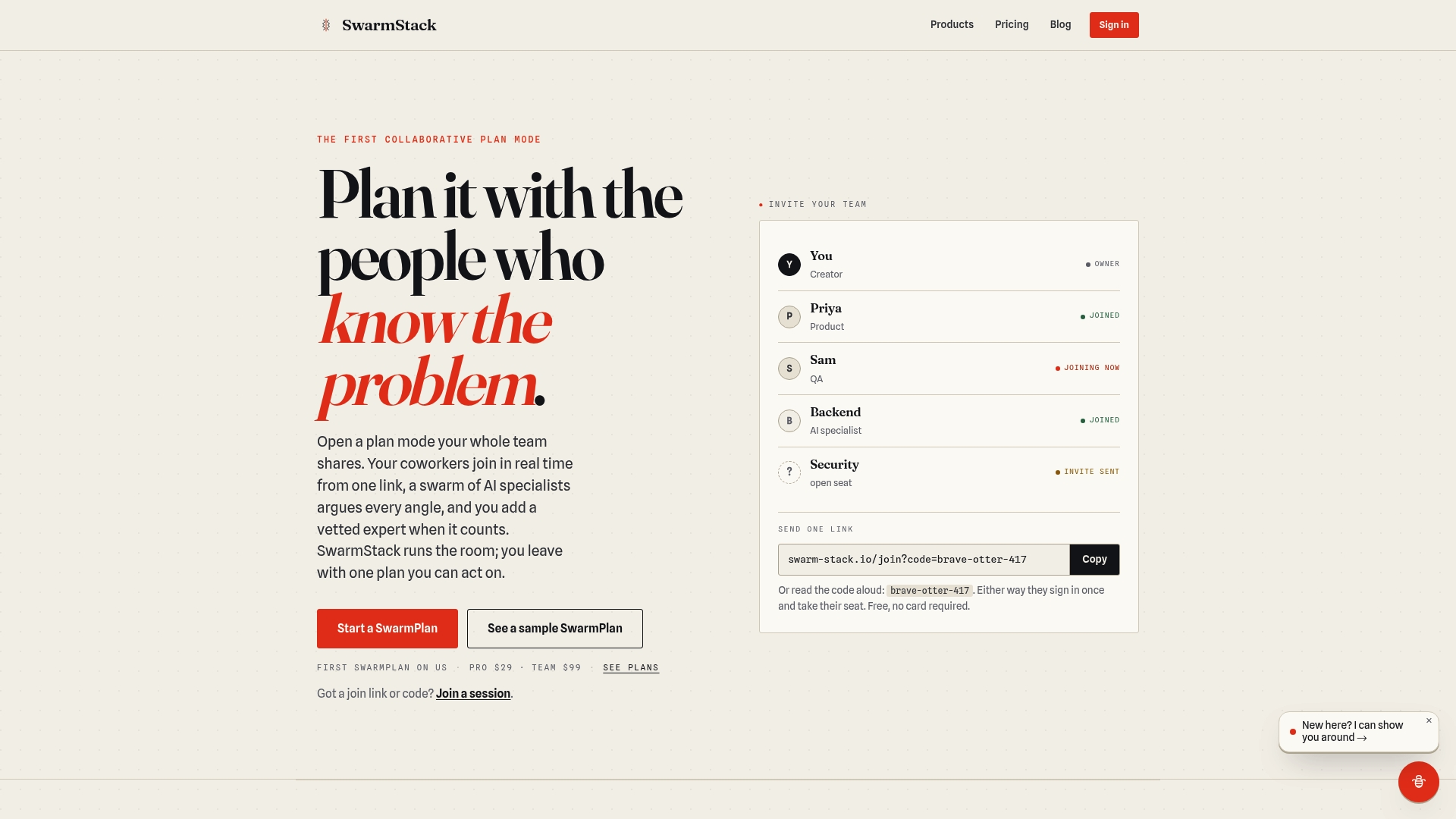
Swarm-stack combines multiple AI specialists with human experts in real-time structured sessions, so every section of your RFP response gets reviewed from multiple angles before it becomes final. Teams join via a single link, assign roles, and produce well-defined deliverables ready to submit. The platform keeps human oversight at the center of every AI-generated output, which means your responses stay accurate, compliant, and on-brand. Check out Swarm-stack's pricing to find the plan that fits your team's proposal volume, or visit swarm-stack.io to see the full platform in action.
FAQ
What is RFP response software?
RFP response software is a tool that automates proposal creation by assembling compliant responses from approved content libraries, templates, and AI-generated drafts. It replaces manual copy-paste workflows with governed, repeatable processes that improve speed and accuracy.
How does AI improve RFP responses?
AI for RFP responses processes incoming documents instantly, generates draft proposals based on past winning bids, and flags compliance gaps before submission. Enterprise AI tools draw only from internal, approved content to avoid the accuracy risks of public AI tools.
What is governed content in RFP software?
Governed content refers to answers and documents that are vetted, approved, and kept current inside a centralized library. It is more valuable than a large unmanaged document store because every suggested answer is accurate and compliant.
How do teams measure RFP software success?
The two most reliable metrics are proposal turnaround time and win rate by proposal type. Teams should also track the percentage of content reused from the library, which shows whether the content governance system is working.
How long does it take to implement RFP response software?
Implementation timelines vary by team size and process complexity, but most teams see meaningful efficiency gains within 60–90 days when they standardize templates and train cross-functional teams together before activating automation features.