Top 6 RFP Tools Alternatives 2026
Explore 6 RFP tools alternatives to streamline your proposal processes and enhance collaboration for project planning in 2026.
Managing RFP collaboration, version control, and stakeholder input often results in confusion, missed rationale, or loss of critical decision history. Traditional RFP tools hide decision debates, limit integrations, lack transparent pricing, or require onboarding that delays productivity. This comparison reveals six alternatives for proposal, procurement, and professional services teams to match their workflow, documentation, and integration needs without blind spots or waste.
Table of Contents
SwarmStack
At a Glance
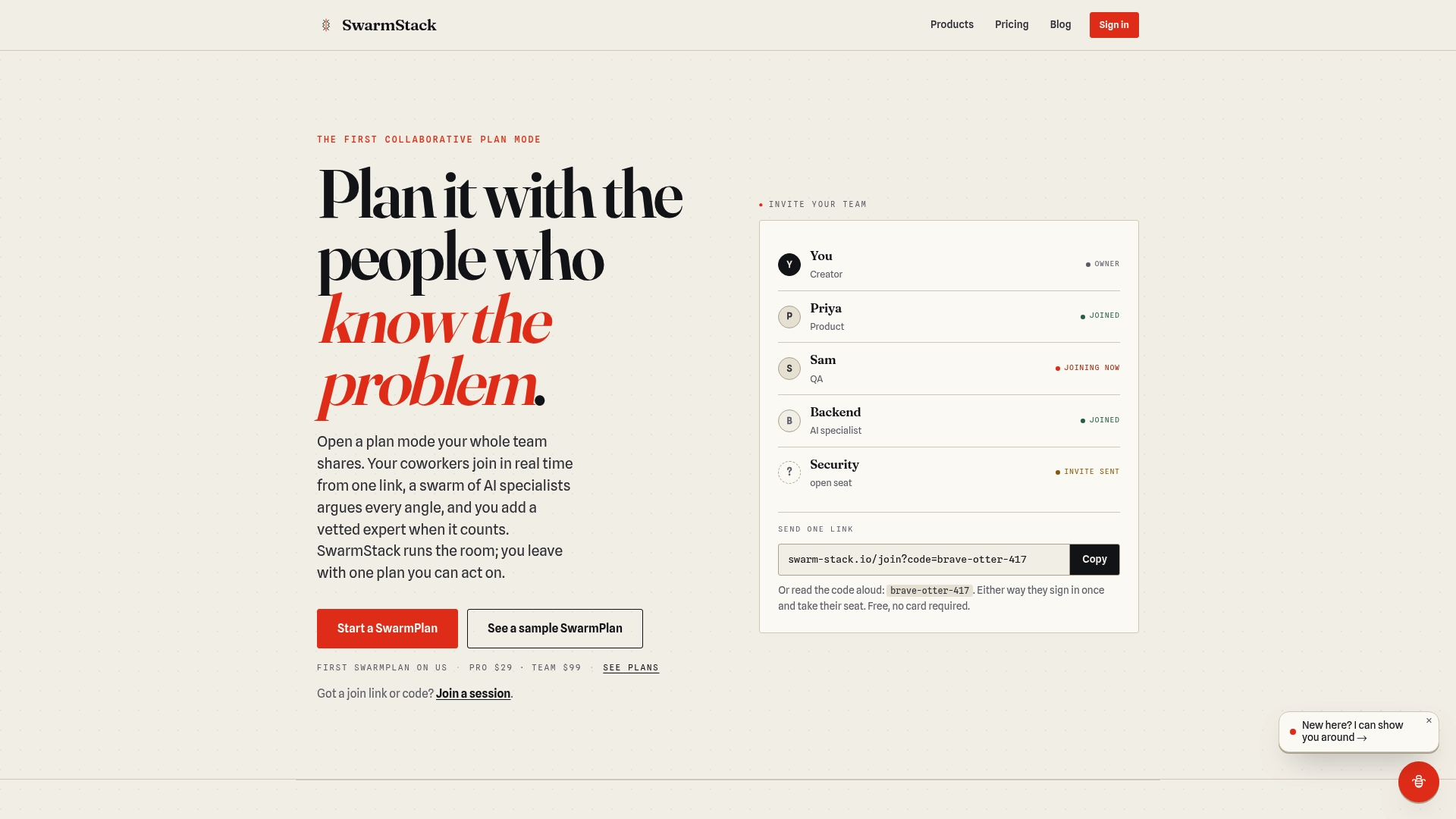
Teams can join a live planning session with a single link to collaborate in real time. The platform records every contention and decision into versioned artifacts that show who argued what and why. SwarmPlan, SwarmRFP, and SwarmSurvey let teams move from debate to a published document without losing the decision trail.
Core Features
SwarmStack runs collaborative AI driven planning rooms where AI specialists and human experts debate requirements and options. The product produces versioned planning artifacts with decision rationale and tracks open contention as part of each version. Teams can create plans, RFPs, and feedback surveys and hire vetted human experts on demand for specific gaps in domain knowledge.
Key Differentiator
Real time debate among AI specialists and human experts produces versioned artifacts that capture both arguments and final choices. That record preserves decision rationale so teams can defend procurement or product decisions later. The platform treats argumentation as the primary mechanism for refining briefs and reducing rework.
Pros
SwarmStack makes the reasoning behind choices visible by keeping versioned artifacts and explicit rationale tied to each decision. The platform supports live collaboration so stakeholders can resolve disagreements inside a single session rather than across many email threads. Bringing vetted human experts into a session fills knowledge gaps when the AI reaches its limits and keeps the discussion grounded in real expertise.
Cons
- Complex onboarding and a learning curve for new users who are not used to structured argumentation and version management.
Who It's For
Teams and organizations handling complex product, project, or purchase planning that need documented rationale for choices will get the most value. Product managers writing detailed RFPs and procurement teams that must justify vendor selection will benefit. Groups that expect to routinely invite external experts for short sessions will find the workflow useful.
Unique Value Proposition
Anyone can invite coworkers or external experts with a single link to start a live session and capture the full debate. That meeting mode reduces the number of follow up cycles and centralizes requirements in a versioned artifact. For teams that must produce defensible deliverables quickly, the approach turns fragmented input into a ready document with the argument trail intact.
Real World Use Case
A product team runs a SwarmRFP session to draft a major vendor request and invites stakeholders from engineering, security, and procurement. Participants argue trade offs in real time and the session records each position and the final requirements. The team publishes the RFP with an attached decision log that clarifies why features were included or deferred.
Pricing
Plan details and pricing tiers are listed on the vendor pricing page. The site covers standard plans and any fees for expert hires or enterprise terms. Visit the pricing URL to review current offerings and request an enterprise quote.
Website: https://swarm-stack.io
RFP.ai
At a Glance
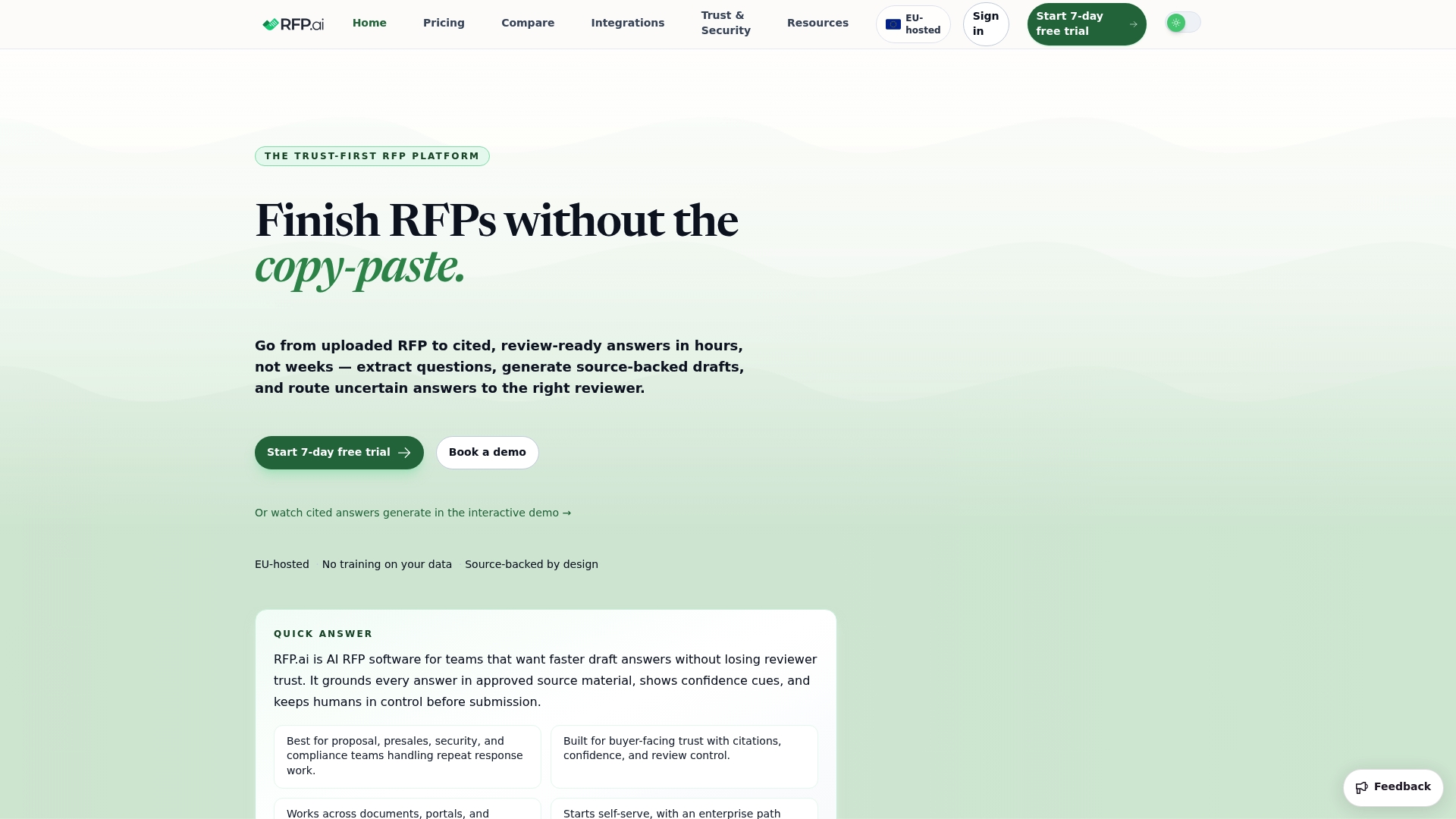
RFP.ai grounds answers in approved source documents and attaches confidence scores and source citations to each draft response. The platform routes low-confidence items to human reviewers and tracks an audit trail for every change. That combination targets high-stakes proposals where verifiability and recordkeeping matter.
Core Features
RFP.ai generates draft responses that cite approved documents and display confidence thresholds for review prioritization. It offers browser extensions to draft directly inside portals and does not train models on customer data, using only uploaded or linked sources. Review workflows, SME assignment, and audit-trail tracking support compliance and shared accountability.
Key Differentiator
The one clear distinction is that RFP.ai ties every answer back to named source documents with explicit citations and a visible confidence score. That approach makes responses auditable and easier for compliance teams to approve. It fits use cases where traceability matters more than generic generative output.
Pros
Source-backed responses improve verification and reduce the need to copy and paste from multiple documents. Built-in review workflows let teams assign subject matter experts and route uncertain answers to humans, preserving accountability. EU data hosting and support for portals such as SAP Ariba and Coupa suit regulated environments that require local data residency.
Cons
- Limited to organizations that need source-verifiable, compliance-focused RFP replies; it may be over-complex for straightforward, low-stakes proposals.
- Pricing is publicly listed but may be costly for small teams or infrequent users.
- Output quality depends on the completeness and quality of uploaded or linked source material.
When It May Not Fit
Small teams that run occasional, low-risk RFPs will likely find this tool more structured than necessary. Organizations without centralized, approved source documents will see variable answer accuracy. If you need quick, lightweight drafting without citation requirements, this product will feel heavyweight.
Notable Integrations
- SAP Ariba
- Coupa
- Google Forms
- Microsoft Forms
Who It's For
Proposal, security, presales, legal, and compliance teams inside regulated industries will get the most value. Typical buyers include healthcare, finance, government, and enterprise IT security groups that handle compliance-heavy procurement. Teams that must produce auditable, source-backed replies will find its controls useful.
Real World Use Case
A security team uploads ISO 27001 policies and audit reports to the system. RFP.ai generates security questionnaire responses with citations and confidence scores. Low-confidence answers are routed to SMEs, shortening review cycles and improving the audit trail for procurement reviews.
Pricing
Plans start at €49/month for Starter with 1M tokens and five users. Professional is €129/month with 5M tokens and 15 users. Enterprise begins at €449/month with unlimited users and 20M tokens; one-time credit packs are available for ad hoc RFPs.
Website: https://rfp.ai
CreateYourRFP
At a Glance
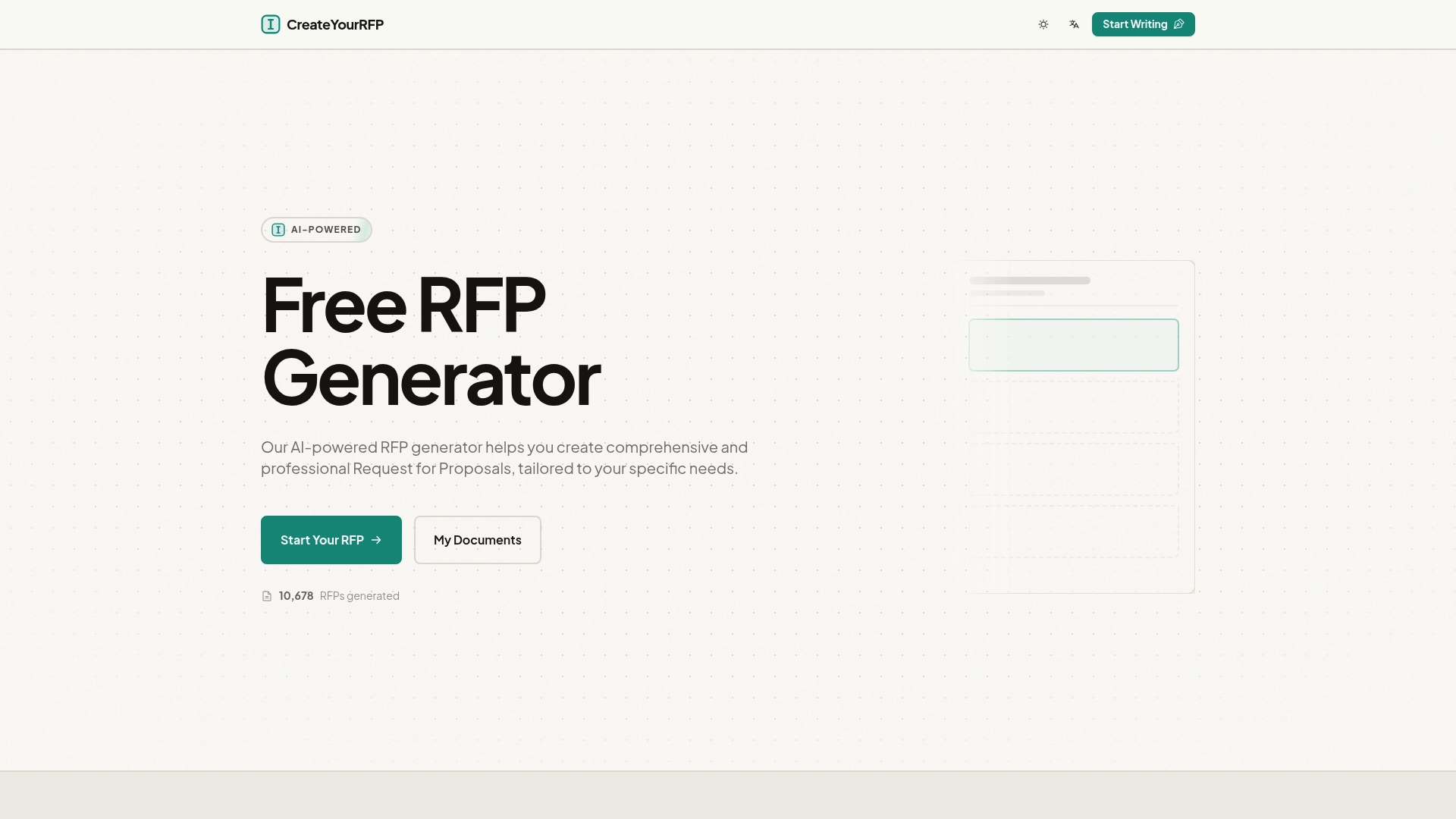
Free to use with PDF, Word, and HTML export options, CreateYourRFP pairs automated writing with industry templates. The vendor advertises AI driven, industry specific templates and a user friendly editor. That mix makes document assembly fast for small teams that need polished RFPs without extra cost.
Core Features
CreateYourRFP combines AI powered RFP content generation, industry specific templates, and multiple format exports into a single editor. It saves drafts automatically to cloud storage and includes educational articles on RFP best practices for reference. The platform exports finished documents as PDF, Word, or HTML for handoff or posting.
Key Differentiator
The product’s standout angle is its focus on sector templates plus in editor AI assistance. The vendor advertises that pairing as the main benefit. That claim matters for teams who reuse common RFP structures across projects. The editor and export mix aim to reduce repetitive formatting and produce consistent output quickly.
Pros
Automates a time consuming part of proposal work by generating draft content and suggested sections. Industry specific templates keep structure consistent and cut the hours spent choosing clause order and headings. Being free removes procurement friction for small consultancies and in house teams that lack a formal purchasing process. Auto save and cloud storage reduce risk of lost changes when multiple people review a draft.
Cons
- Limited customization according to external reviews. Advanced template or clause customization appears weaker than in enterprise RFP suites.
- No public list of integrations. If you need CRM or procurement system links, integration details are not available.
- Sparse support and training information. Documentation and responsive help options are not clearly documented.
When It May Not Fit
This product may not suit complex procurement processes that require heavy template customization or conditional logic. Large enterprises that need deep integrations with procurement or contract management systems will find gaps. Teams requiring guaranteed enterprise grade support and onboarding will likely need a vendor that documents service levels.
Who It's For
Organizations and professionals who need to produce structured RFP documents quickly and with minimal cost will get the most value. Small consultancies, startup product teams, and internal procurement groups with simple workflows can adopt it without budget approval. Users who plan to edit templates heavily or link to procurement tooling should look elsewhere.
Real World Use Case
A small consultancy uses CreateYourRFP to draft proposals for IT and consulting engagements. The team selects a template, generates draft sections with AI, and exports a Word file for client edits. That workflow cuts document prep time and keeps proposals consistent across clients.
Website: https://createyourrfp.com
RFP360.ai
At a Glance
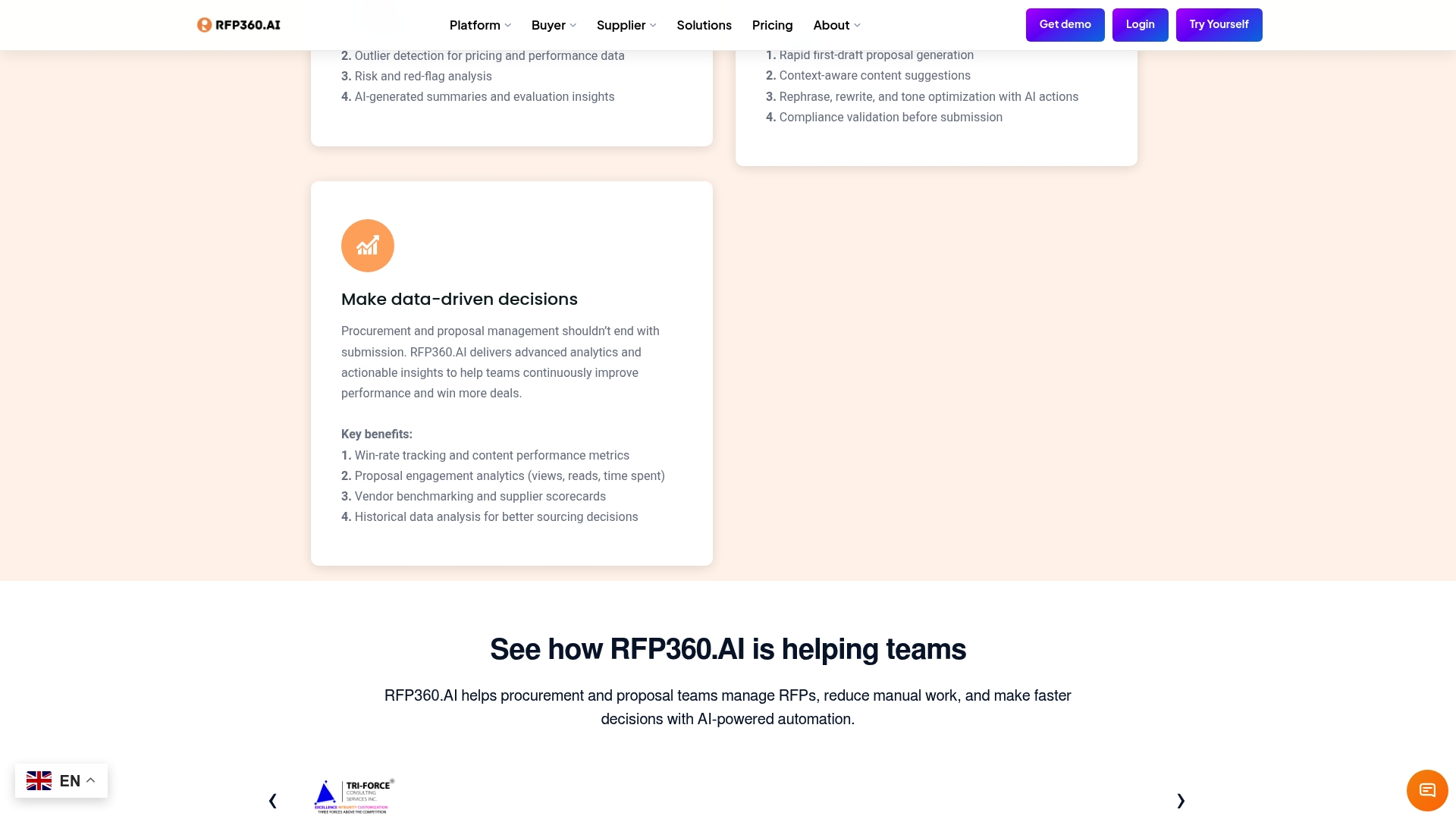
RFP360.ai's marketing materials state Tri-Force Consulting secured over $600,000 in government contracts after adopting the platform. The product targets both buyers and suppliers with AI assistance across proposal activities. It emphasizes analytics, supplier benchmarking, and procurement-focused risk detection.
Core Features
The product combines AI-driven RFP creation and response drafting with automated response evaluation and scoring. It includes supplier management and benchmarking tools, collaboration features for teams, and risk and outlier detection in submissions. Additional capabilities include compliance matrix generation, procurement analytics, and connections to CRM and ERP systems.
Key Differentiator
RFP360.ai centers on a single AI-driven workflow that covers the RFP lifecycle from content creation to assessment and reporting. That approach keeps authoring, scoring, and procurement analytics inside one platform rather than spread across separate tools.
Pros
RFP360.ai supports both buyer and supplier sides, which reduces file handoffs and keeps collaboration in one workspace. The AI features automate content generation, scoring, and analysis, saving drafting time and standardizing evaluations. The platform also provides procurement-focused analytics and reports, and it advertises enterprise grade security for compliance and data protection.
Cons
- The interface is complex and feature rich, which may overwhelm small teams or less technical users.
- Pricing can be complex and may not suit organizations seeking simple, budget friendly options.
- Extensive features can require significant onboarding and training before teams reach full productivity.
When It May Not Fit
Small procurement teams without dedicated resources may find the platform too large for their needs. Organizations needing a lightweight RFP editor or minimal configuration may prefer a simpler tool. Firms that require a fast, out of the box setup should plan for longer implementation and training timelines.
Notable Integrations
- Salesforce
- HubSpot
- SAP Ariba
- Oracle
- Coupa
Who It's For
Procurement teams, government agencies, proposal managers, and vendors that need an AI enhanced RFP and bid management platform will find this product relevant. Enterprise procurement groups and consulting firms with complex sourcing workflows will gain most from the analytics and supplier benchmarking features.
Real World Use Case
A consulting firm used RFP360.ai to compress proposal cycles and respond to more opportunities with faster turnaround. That effort led to the vendor reported contract wins and highlighted how automation plus analytics drove more competitive bids.
Pricing
Pricing varies by plan and organization size. Options the vendor lists include a free entry tier, tiered subscription plans, and custom enterprise solutions for larger organizations.
Website: https://rfp360.ai
Light RFP
At a Glance
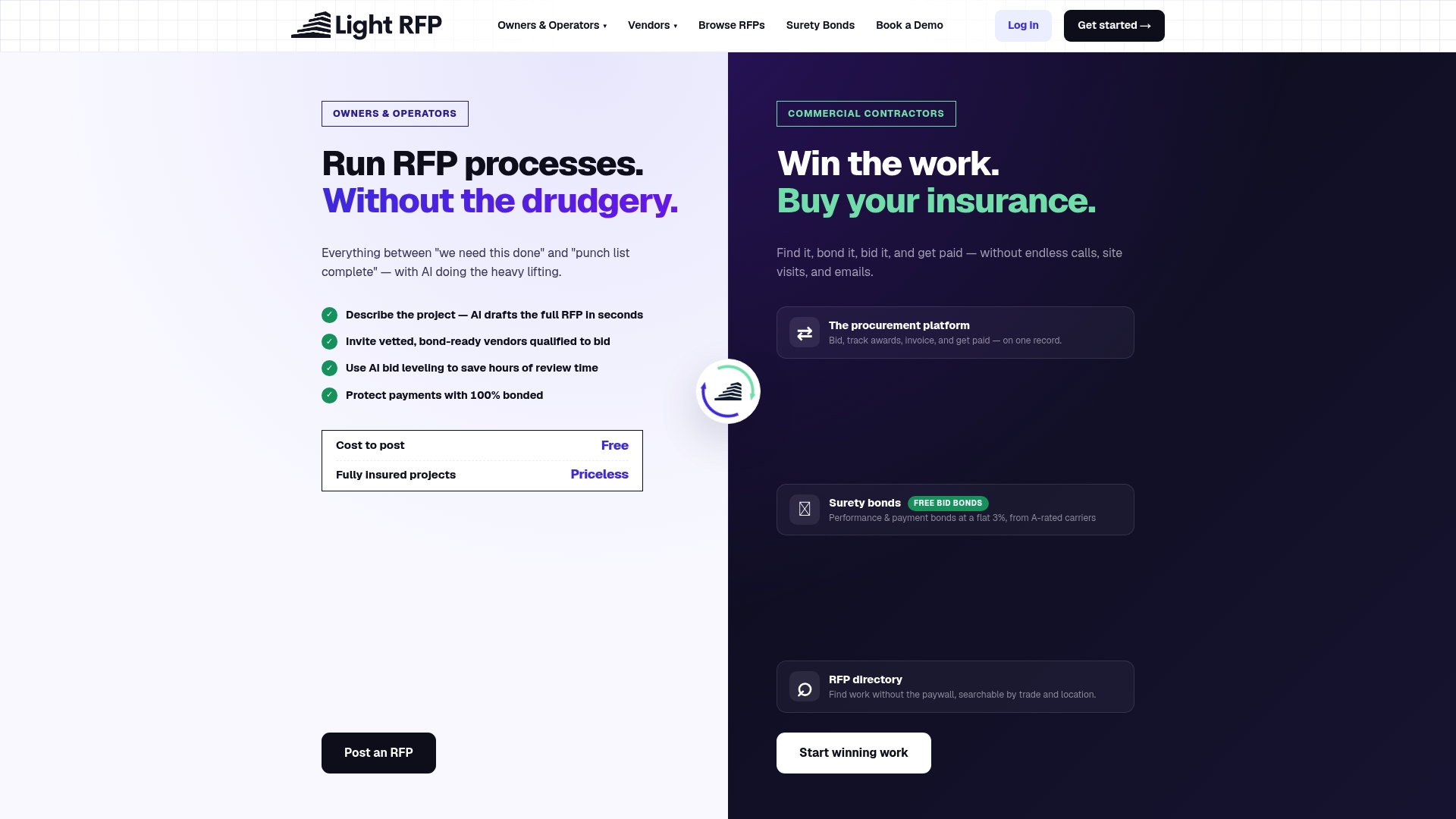
Light RFP combines vendor sourcing, surety bonding, and business insurance inside a single procurement workflow for construction and real estate projects. The platform highlights AI assistance for writing RFPs and comparing bids, and it lists clients such as NYCEDC, McKinney, and JLL. That compact mix reduces the number of external vendors owners must coordinate.
Core Features
The product offers AI-assisted creation of RFPs that start from plain project descriptions and an AI-powered bid comparison engine that flags risks. It operates a nationwide marketplace for posting and finding projects and centralizes RFI threads so questions and answers live with the project record. Team collaboration controls let owners limit access and assign roles across procurement tasks.
Key Differentiator
Light RFP focuses its AI tools and workflows specifically on the built environment, combining procurement with surety and insurance in one system. That industry focus and nationwide vetting set it apart from Swarm-stack, which centers on multi-expert, real-time planning and session-driven RFP creation.
Pros
Light RFP reduces manual work by putting sourcing, bonding, and insurance checks inside a single workflow, which shortens handoffs between teams and third parties. The AI features take routine steps such as drafting RFP language and comparing bids off your plate so your procurement team can focus on evaluation and negotiations. A nationwide marketplace expands the pool of bidders, and vendor vetting adds an extra level of deal security before contracts move to execution.
Cons
-
Page content for features and integrations is sparse, which makes detailed technical due diligence harder.
-
Public pricing is limited; owners see free posting and vendors see free bidding, but specific SaaS or premium fees are not listed.
-
The platform lists few technical integrations or customization options, so connecting it to complex back-office systems may require manual work.
When It May Not Fit
If your procurement needs require deep API integrations or bespoke workflow automation, Light RFP may feel constrained by limited technical documentation. Teams that require transparent, line-item pricing for budgeting may find the public information insufficient. If your projects sit outside construction or real estate, the built environment focus may deliver less ROI.
Who It's For
The product fits real estate developers, property managers, and contractors who run project-level procurement and need bonding and insurance verified before award. Owners who want to post RFPs publicly to find vendors across the U.S. will benefit most. Procurement teams with light integration needs will adopt faster than those needing heavy technical customizations.
Real World Use Case
A property developer drafts a brief and uses Light RFP to generate a full RFP from that description. The team posts the project on the nationwide marketplace, collects vendor bids, and uses the AI comparison to highlight discrepancies and potential red flags. RFIs stay in the project thread, and bonding and insurance checks happen before award.
Pricing
Detailed pricing is not publicly listed. The site indicates posting RFPs is free for owners and bidding is free for vendors, while some SaaS fees apply for payment processing. Organizations should contact Light RFP for a full pricing breakdown and any enterprise arrangements.
Website: https://lightrfp.com
QorusDocs
At a Glance
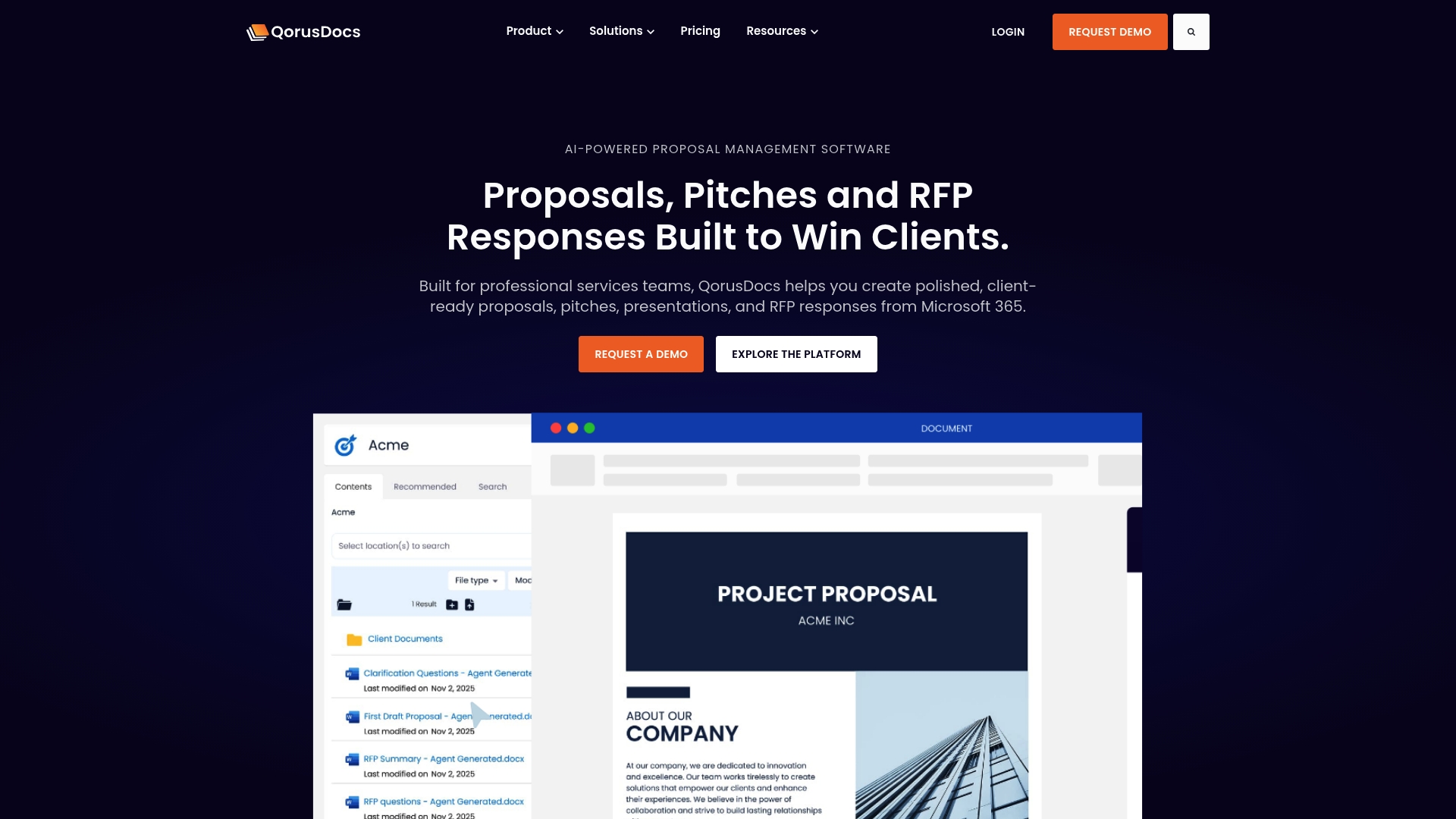
QorusDocs reports a law firm increased pitch volume by 67% after standardizing proposal and pitch processes with its tools. That report ties to using its AI assembly inside Microsoft 365 and CRM systems to reduce manual work and enforce content reuse. The product focuses on producing client-ready proposals, presentations, and RFP responses for professional services teams.
Core Features
QorusDocs combines AI powered proposal automation with content governance and enterprise search to accelerate document assembly. It runs inside Word and PowerPoint and syncs with Teams, SharePoint, Salesforce, and Dynamics so authors can collaborate where they already work. The product also includes configurable calculators, reuse libraries, and advanced analytics to track proposal performance.
Key Differentiator
The product concentrates on professional, legal, and technical services with tailored workflows and proposal calculators designed for firm-specific needs. Those templates and calculators reflect billable hour, ROI, and legal language requirements rather than generic proposal patterns. That vertical focus changes how libraries, approvals, and pricing tables are organized.
Pros
Teams gain stronger consistency and faster output by reusing approved content and applying AI to personalization. Integration with Microsoft 365 reduces context switching and keeps version control inside systems staff already use. Support for enterprise security and Salesforce connectors helps preserve audit trails and align proposals with pipeline data.
Cons
-
Pricing is not publicly listed, so organizations must request a demo and custom quote.
-
Implementation time varies with enterprise complexity and requires initial setup and training.
-
New users unfamiliar with AI automation may face a learning curve before reaching full productivity.
When It May Not Fit
Large enterprises with complex legacy systems will need planning for integration and onboarding. Small firms or teams that need off the shelf, self-serve pricing may find the procurement process slow. Organizations outside professional or legal services will see less immediate value because workflows and calculators target those sectors.
Notable Integrations
-
Microsoft 365: Word, PowerPoint, Teams, SharePoint, OneDrive.
-
Salesforce and Microsoft Dynamics for CRM synchronization and pipeline linking.
-
Litera Foundation, iManage, DealCloud, and Highspot for document management and sales enablement.
Who It's For
Proposal, pitch, and RFP teams in legal, IT, AEC, and professional services that need controlled reuse and configurable pricing models. Firms that already use Microsoft 365 and a CRM will deploy faster because the product operates inside those systems. Teams that require auditability and enterprise security will find the platform aligned with those needs.
Real World Use Case
The vendor reports a multinational law firm achieved a 67% rise in pitch volume after standardizing templates and libraries. That figure accompanied shorter proposal turnaround and more repeatable deliverables. Teams used embedded calculators and reuse libraries to produce consistent pricing and legal language across offices.
Pricing
Pricing is not publicly listed and requires contacting sales for tailored quotes. QorusDocs offers enterprise packages and schedules demos to scope integration and training needs. Organizations should plan for license and professional services costs when budgeting.
Website: https://qorusdocs.com
Comparison of alternatives
Each platform profiled offers targeted benefits for crafting RFPs, with distinct focuses tailored to varied organizational priorities and constraints.
Collaboration versus specificity in RFP generation
SwarmStack excels in facilitating real-time collaborative sessions integrating AI specialists and human experts, creating, version-controlled artifacts. Conversely, RFP.ai specializes in automating compliance-centric RFP response workflows, with citation-verifiable outputs optimized for regulated environments. CreateYourRFP focuses on affordability with a simple, template-driven approach that supports small teams, making it the preferred choice for budget-constrained settings.
Industry-specific integrations and analytical depth
Light RFP is designed for construction and real estate sectors, integrating insurance, bonding, and bid comparison, making it suitable for real estate developers and contractors. RFP360.ai offers in-depth analytics, suitable for enterprises handling complex procurement cycles, while QorusDocs targets professional services teams with integrations into Microsoft 365 and advanced proposal performance tracking.
Best fit
- Organizations handling intricate RFPs that require defensible decision logs are best suited for SwarmStack.
- Small teams seeking cost-effective solutions without integration challenges will benefit most from CreateYourRFP.
- Regulated industries that need citation-backed responses will find RFP.ai appealing.
- Teams focused on real estate or construction procurement can rely on Light RFP for its tailored workflows and industry features.
- Enterprises seeking advanced analytics and deep integrations into existing platforms will favor QorusDocs or RFP360.ai.
Our pick
For organizations prioritizing collaborative RFP drafting enhanced by real-time expert input and verifiable decision-making, SwarmStack provides value. Its unique debate-oriented sessions distinguish it from more niche or narrowly focused alternatives. However, for teams with specific sector-driven needs or smaller scopes, exploring the competitors listed ensures a tailored fit for various scenarios.
The following comparison highlights key attributes of leading RFP software to identify a tool best suited for unique organizational requirements.
| Product | Key Differentiator | Best For | Pricing | Limitation |
|---|---|---|---|---|
| Swarm-stack | Live sessions with AI and human experts producing rationale artifacts | Complex product or procurement planning | Price not published | Learning curve for structured version management |
| RFP.ai | Source-backed responses with citations and confidence scores | Compliance-heavy proposal teams | €49–€449/month | Over-complex for low-stakes RFPs |
| CreateYourRFP | Free, template-based editor with AI-assisted drafting | Small teams with simple workflows | Free | Limited customization and lack of integrations |
| RFP360.ai | Unified AI workflow covering RFP lifecycle | Enterprise procurement and benchmarking | Contact for pricing | Complex setup and onboarding requirements |
| Light RFP | AI tools integrated with construction-specific workflows | Real estate and construction project teams | Price not published | Limited technical customization and documentation |
| QorusDocs | Tailored workflows for professional services with Microsoft 365 integration | Legal, technical, and professional services | Contact for pricing | Designed primarily for firms using Microsoft ecosystem |
Why Complex RFP Processes Demand Clearer Collaboration and Decision Records
Many teams struggle with scattered feedback and unclear decision trails when managing complex project plans or RFPs. Swarm-stack addresses these challenges by enabling real-time collaboration among AI specialists and human experts through structured planning sessions. This approach captures every argument and choice in versioned artifacts, making decision rationale transparent and easy to defend. Teams that handle complex product or purchase planning will find Swarm-stack’s session-based platform vital for reducing rework and speeding approvals.
Swarm-stack lets you:
- Invite coworkers and experts with a single link
- Debate and refine requirements live
- Produce ready-to-implement deliverables with full rationale
Learn how Swarm-stack’s AI-driven collaboration improves planning clarity at Swarm-stack.io.
FAQ
What unique capabilities does Swarm-stack offer for RFP collaboration?
Swarm-stack excels at generating versioned planning artifacts that archive decision rationale and tracking contention. The platform runs collaborative AI-driven planning rooms where AI specialists and human experts debate requirements and options. Teams benefit by having a clear record of reasoning behind every choice, making it easier to justify decisions later.
How does Swarm-stack compare to RFP.ai in terms of source verification?
RFP.ai provides source-backed responses with explicit citations and confidence scores, making it suitable for compliance-heavy proposals. Swarm-stack, on the other hand, specializes in real-time debate and decision preservation, which is ideal for teams needing immediate collaborative input. Both platforms serve specific needs, with RFP.ai focusing on compliance while Swarm-stack emphasizes collaborative decision-making.
Which features make Swarm-stack more suitable for procurement teams?
Swarm-stack’s real-time collaboration allows procurement teams to involve multiple stakeholders in a single session, resolving disagreements efficiently. The platform’s ability to document each debate into versioned artifacts ensures that the rationale for choices is preserved, directly supporting teams that need a clear justification for their decisions.
Can procurement teams work with external experts while using Swarm-stack?
Yes, procurement teams can invite vetted human experts into Swarm-stack sessions to fill knowledge gaps as needed. This feature enhances the quality of discussions and ensures that decisions are based on the best available information, making it easier to navigate complex procurement scenarios.
What are the onboarding challenges with Swarm-stack for new users?
New users may face a complex onboarding process, especially if they are not familiar with structured argumentation and version management. Teams need to invest time in understanding how to utilize the platform's features effectively to maximize its potential.