Top 6 Security Questionnaire Software Alternatives 2026
Explore 6 top security questionnaire software alternatives to help streamline risk assessments and enhance vendor risk management processes.
Managing security questionnaires and proposals across teams often leads to wasted hours and inconsistent records. Most options restrict automation, keep pricing hidden, or fail to create audit-ready responses. This article compares automation, collaboration, and integration features across six alternatives so security, compliance, and proposal teams can match a tool to their workflow without trial and error.
Table of Contents
SwarmStack
At a Glance
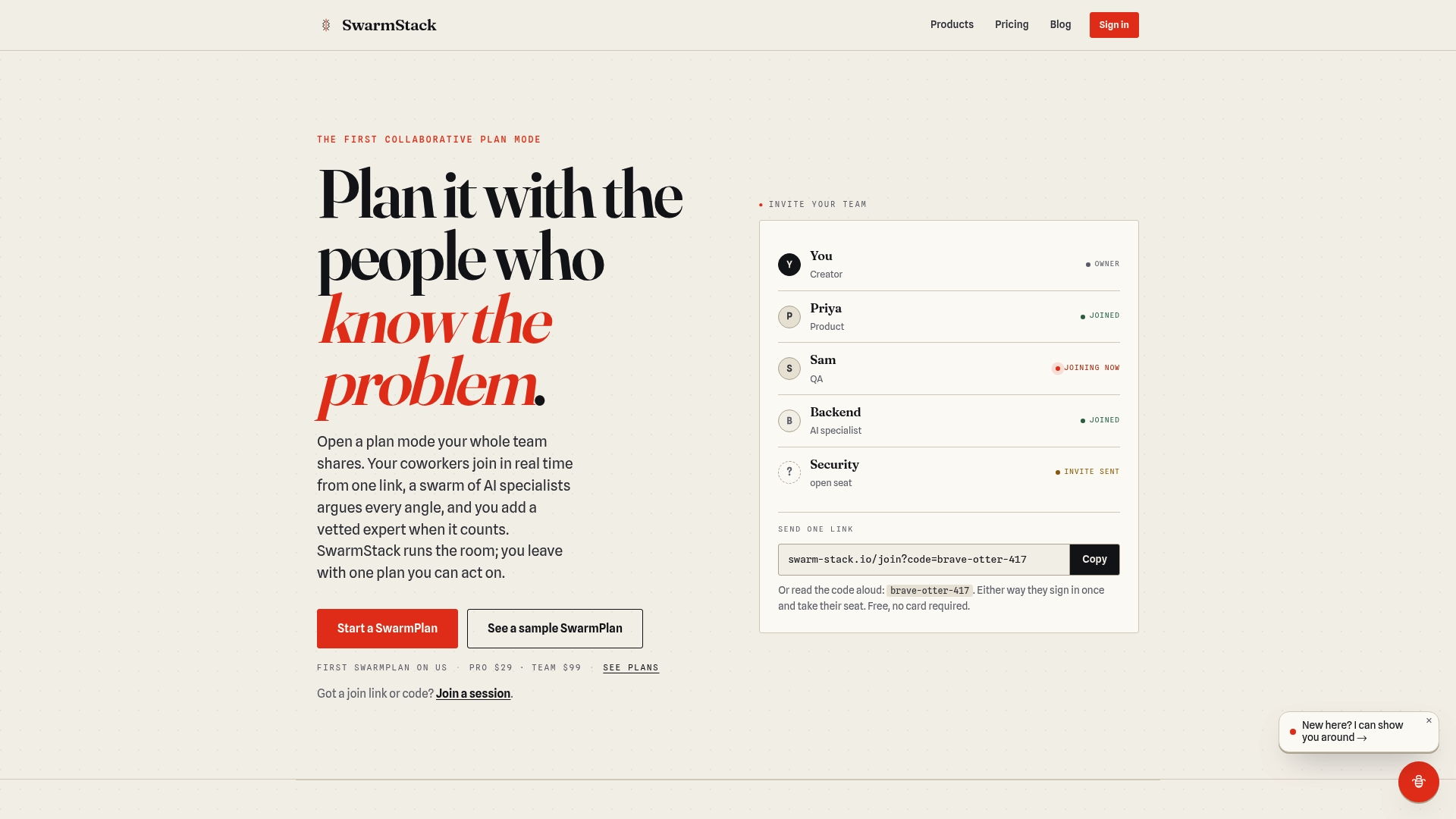
SwarmStack runs structured live sessions where teams and AI specialists argue options and produce versioned artifacts and decision records. These sessions support plans, buyer-side RFPs, and stakeholder surveys. Teams can add external experts and invite coworkers via a single link to join the same session.
Core Features
SwarmStack combines real-time collaboration with AI orchestration and a human expert marketplace, so debates include both machine suggestions and vetted specialist input. The platform creates versioned documents that keep rationale and decision history alongside each revision. It offers distinct products—SwarmPlan, SwarmRFP, and SwarmSurvey—for planning, procurement, and feedback collection.
Key Differentiator
Structured, debate-driven collaboration with explicit decision records stands out. Sessions act as moderated debates where an AI referee organizes arguments and records outcomes. The expert marketplace lets you pull external specialists into the same live discussion and attach their recommendations to the versioned output.
Pros
SwarmStack encourages transparent debate and captures the reasoning behind decisions, which reduces ambiguity later in execution. Combining AI orchestration with vetted human experts helps surface tradeoffs that a single facilitator might miss. The platform hands you executable, version-controlled plans and records that development, procurement, or leadership teams can action without rework.
Cons
- May be overly complex for small or straightforward projects
Who It's For
Product teams, project managers, procurement professionals, and organizational decision-makers who need recorded rationales for strategic choices will gain the most. If your work depends on defensible vendor selection or on-disk specifications, this fits. Smaller ad hoc efforts may find the process heavier than necessary.
Unique Value Proposition
The expert marketplace lets you hire vetted external specialists into live sessions, so their input appears in the same decision record as internal debate. That arrangement reduces handoffs between research, vendor evaluation, and planning teams. The outcome is a single, versioned deliverable that captures both argumentation and the chosen path forward.
Real World Use Case
A product team runs a SwarmPlan session to pick an architecture for a new feature. Engineers, a solutions architect from the marketplace, and product stakeholders argue tradeoffs while the AI referee structures the debate. The team exports a versioned plan with decision rationale ready for the engineering backlog.
Pricing
SwarmStack lists a Pro tier at $29 per month and a Team tier at $99 per month. A free trial is available with limited sessions and features so teams can test live sessions and the expert marketplace before committing.
Website: https://swarm-stack.io
Skypher
At a Glance
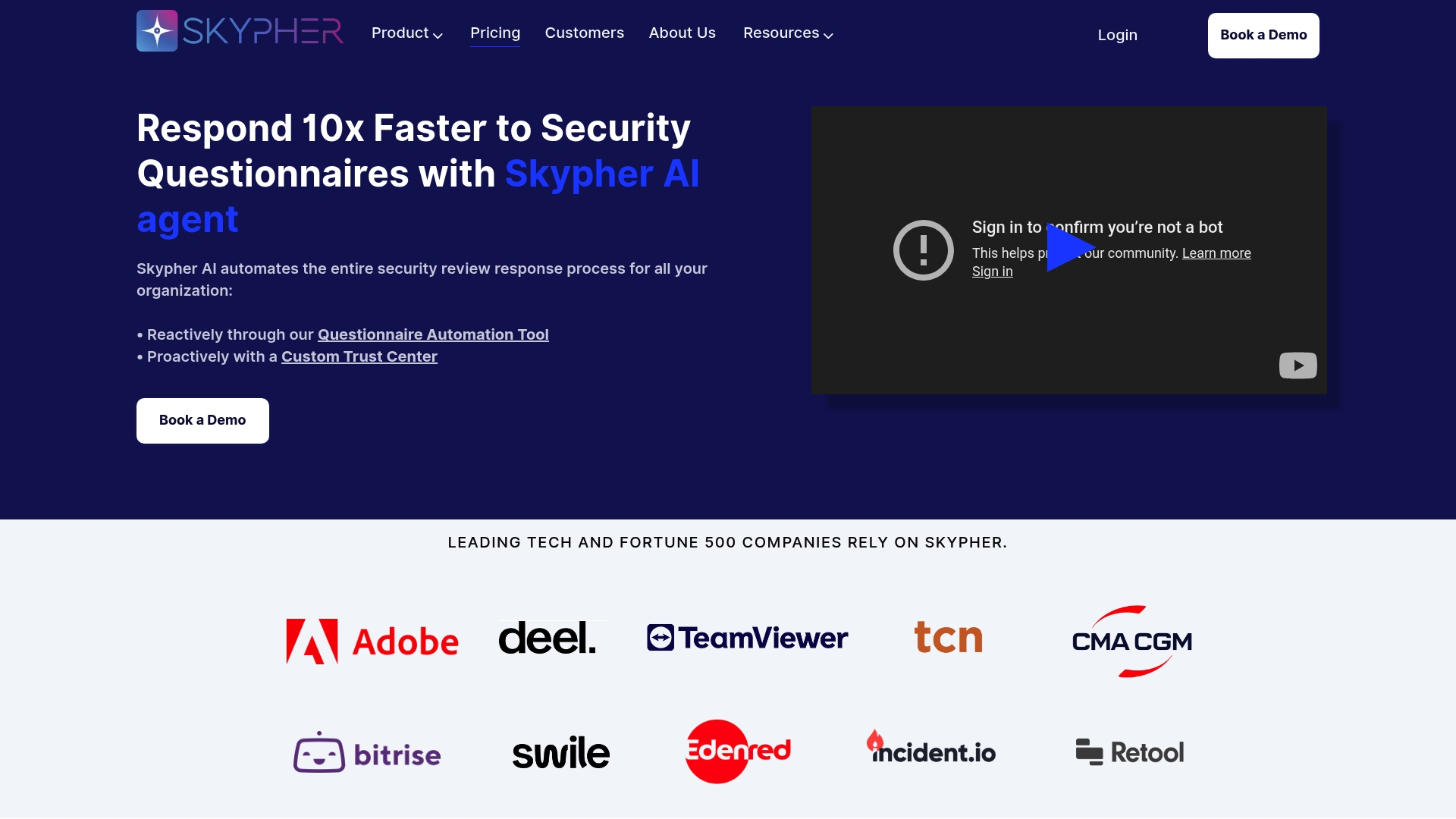
A custom Trust Center sits alongside an automated questionnaire engine, letting teams publish verified security documentation for external audiences. The product emphasizes automation to speed responses and includes integrations with Notion and Slack to connect workflow systems. Pricing is arranged by company size and requires a custom conversation with sales.
Core Features
Skypher offers Questionnaire automation that pulls answers from a central knowledge base and supports common input and output formats for security questionnaires. The platform pairs that automation with a Custom Trust Center for publishing policies and evidence, and it includes collaboration tools so reviewers and subject matter experts can work in the same response. Integrations let teams push status updates into their existing workflow tools.
Key Differentiator
The main angle is the combination of automation plus publishable trust documentation. That mix positions Skypher as an answer automation tool and a customer facing documentation hub. It targets security and compliance teams at tech firms rather than broader planning or RFP design tools like Swarm-stack.
Pros
Skypher helps reduce the manual effort of answering repeated security questions and makes it easier for nonsecurity colleagues to contribute correct responses. Collaboration features let teams assign questions, comment inline, and keep an audit trail so reviewers do not lose context. Integrations with common workflow tools keep updates visible in the places teams already work, and enterprise customers can request tailored support and service level agreements.
Cons
-
No third party review data is publicly available. That limits independent validation of the experience and performance.
-
Pricing details and tiered feature lists are not published. You must contact sales to get a quote and feature breakdown.
-
The vendor site shows occasional 404 errors on some pages. That can make initial evaluation and trial sign up more cumbersome.
When It May Not Fit
If you need transparent, self served pricing to compare vendors quickly this product may not fit. If external peer reviews or third party benchmarks are a procurement requirement this solution will feel risky. Smaller teams that prefer out of the box, documented pricing and self onboarding will likely prefer a vendor with public tiers.
Notable Integrations
Skypher integrates with Notion and Slack, which keeps questionnaire work tied to document repositories and team notifications. Those integrations let you reference technical documentation and alert stakeholders without switching tools. No other integrations are listed publicly.
Who It's For
Security teams, compliance officers, and solutions engineers at tech companies and larger organizations that face frequent security questionnaires. It fits teams that want a single source of truth for answers and a customer facing Trust Center to reduce repetitive requests.
Real World Use Case
Skypher's marketing materials state a tech company shortened questionnaire turnaround from days to hours, enabling faster sales cycles and compliance approvals. That claim aligns with customer testimonials that emphasize time savings and easier cross team collaboration during vendor security reviews.
Pricing
Pricing is flexible and based on company size. The vendor asks prospects to talk with a product specialist to get a custom quote and implementation plan. Enterprise support and bespoke SLAs are available through that sales process.
Website: https://skypher.co
Cyberbase
At a Glance
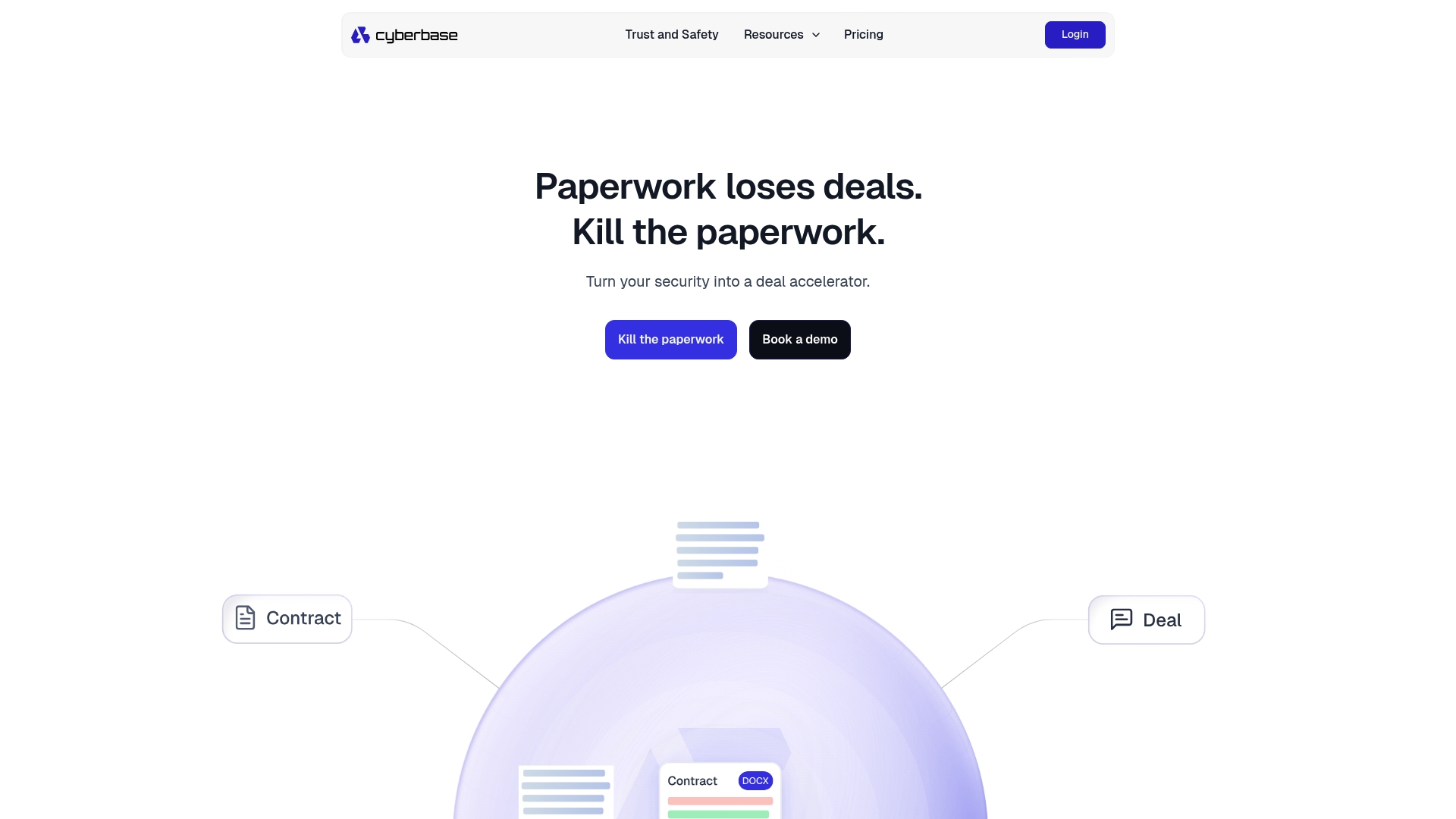
According to the company, Cyberbase reduces deal cycle times from weeks to minutes by automating redlining and questionnaire responses. The product runs inside the customer cloud on Azure or AWS, which preserves control over sensitive documents and policy sources. That deployment model suits teams that must keep all data inside their own environment while accelerating contract review.
Core Features
Cyberbase automates security contract redlining with DOCX support and extracts authoritative answers from live policy sources so responses match current controls. The platform pulls data automatically from a customer’s policies to avoid contradictory answers and to keep replies source traced. It also offers private cloud deployment options and claims accuracy that avoids hallucinations when producing compliance text.
Key Differentiator
Cyberbase’s defining trait is that it runs entirely within your own cloud environment, which keeps all document processing and outputs under your control. This single-tenant friendly approach appeals to regulated teams that cannot accept third-party hosted processing. For buyers who require on-premises equivalence without onsite hardware, this delivers a narrow but clear fit.
Pros
The vendor states enterprise security controls such as SOC 2 and ISO work are in progress, which signals a focus on auditability and formal controls. Teams that adopt Cyberbase report faster document cycles because redlines and questionnaire answers come from live policies rather than manual copy and paste. Private cloud deployment and shared team data help security reviewers collaborate around a single source of truth and reduce version conflicts.
Cons
- Some public web pages return 404 errors, which suggests online documentation and marketing pages are incomplete or under construction.
- Independent user reviews are sparse, so there is limited third-party reporting on long term user experience or feature gaps.
- The product data includes malformed fields and stray strings, which creates uncertainty about feature lists and publicly visible details.
When It May Not Fit
If your organization lacks internal cloud operations on Azure or AWS, deploying and managing a private instance will add operational overhead. Teams that need broad independent reviews or a large public knowledge base may prefer vendors with more visible customer feedback. Small security teams that want a simple hosted SaaS experience without private cloud management will find this approach more work than benefit.
Who It's For
Security teams in mid to large enterprises that must keep sensitive documents inside their own cloud will get the most value. Compliance groups in regulated industries that require single-tenant deployments will find the product alignment attractive. Teams that want to cut review time while preserving strict data control are the target user profile.
Real World Use Case
A security team receives a 50+ page prospect contract and uploads it to Cyberbase. The system processes the document against live policies, flags risky clauses, and produces source-traced responses in minutes. That mechanism keeps negotiations moving while the legal and security teams review the flagged redlines.
Pricing
Professional: free to start with usage limits to trial core features and policy-driven answers. Enterprise: custom pricing that includes private cloud deployment and implementation support for regulated environments. Pricing is tiered by deployment complexity and enterprise needs.
Website: https://cyberbase.ai
Iris
At a Glance
Iris reports reducing RFP response time from weeks to minutes. That claim highlights the platform's focus on speed and repeatability for proposal work. The interface and automation aim to cut manual drafting and accelerate scores of security questionnaire answers.
Core Features
Iris uses AI-driven response generation that pulls from verified organizational content and attaches citations to answers. The product bundles project initiation, collaboration tools, and workflow automation so teams can assign tasks, track progress, and maintain versioned answers. Knowledge management keeps source policies and docs current to reduce stale responses during vendor assessments.
Key Differentiator
Iris centers responses on verified organizational knowledge so answers reference internal policies and source documents. That design reduces guesswork and preserves audit trails for compliance reviews. The citation workflow and answer provenance help security and legal teams show where each claim originated.
Pros
The interface is largely intuitive and helps teams produce answers faster while keeping traceable citations for each response. The vendor advertises support for standards such as SOC 2 and GDPR, which suggests Iris is built with compliance workflows in mind. Collaboration and tasking keep cross functional reviewers aligned and make it easier to hand off complex questionnaire sections across security, legal, and procurement.
Cons
-
Mobile functionality needs improvement. Several users report limited access and clunky screens on phones which slows review outside the office.
-
New teams face a learning curve. Training and onboarding take time before content sources and answer templates deliver consistent output.
-
Integration and customization limits exist. Some third-party systems show constraints that require additional engineering work to connect.
When It May Not Fit
Organizations that need full mobile editing on the go will find Iris restrictive. Smaller teams without the resources to curate internal knowledge bases may struggle during onboarding. Buyers requiring deep custom connectors for niche systems should plan for extra integration work or to keep legacy tools in parallel.
Notable Integrations
Iris connects with common enterprise systems: CRM systems such as Salesforce, document storage like SharePoint and Google Drive, and collaboration platforms including Slack and Teams. These integrations help populate source documents and surface context during answer drafting.
Who It's For
Security, legal, and proposal teams in mid to large organizations that maintain internal policies and need faster, auditable responses will get the most value. Teams that already centralize documents and can invest in onboarding will see the biggest efficiency gains.
Real World Use Case
A large enterprise security team used Iris to respond to security questionnaires and DDQs. The team moved from multi day turnarounds to multi hour cycles while keeping answers consistent and traceable to policy documents.
Pricing
Iris lists pricing as a contact sales model. Enterprise buyers should expect tiered or custom plans and should discuss integration needs and onboarding with the vendor.
Website: https://heyiris.ai
Vendict
At a Glance
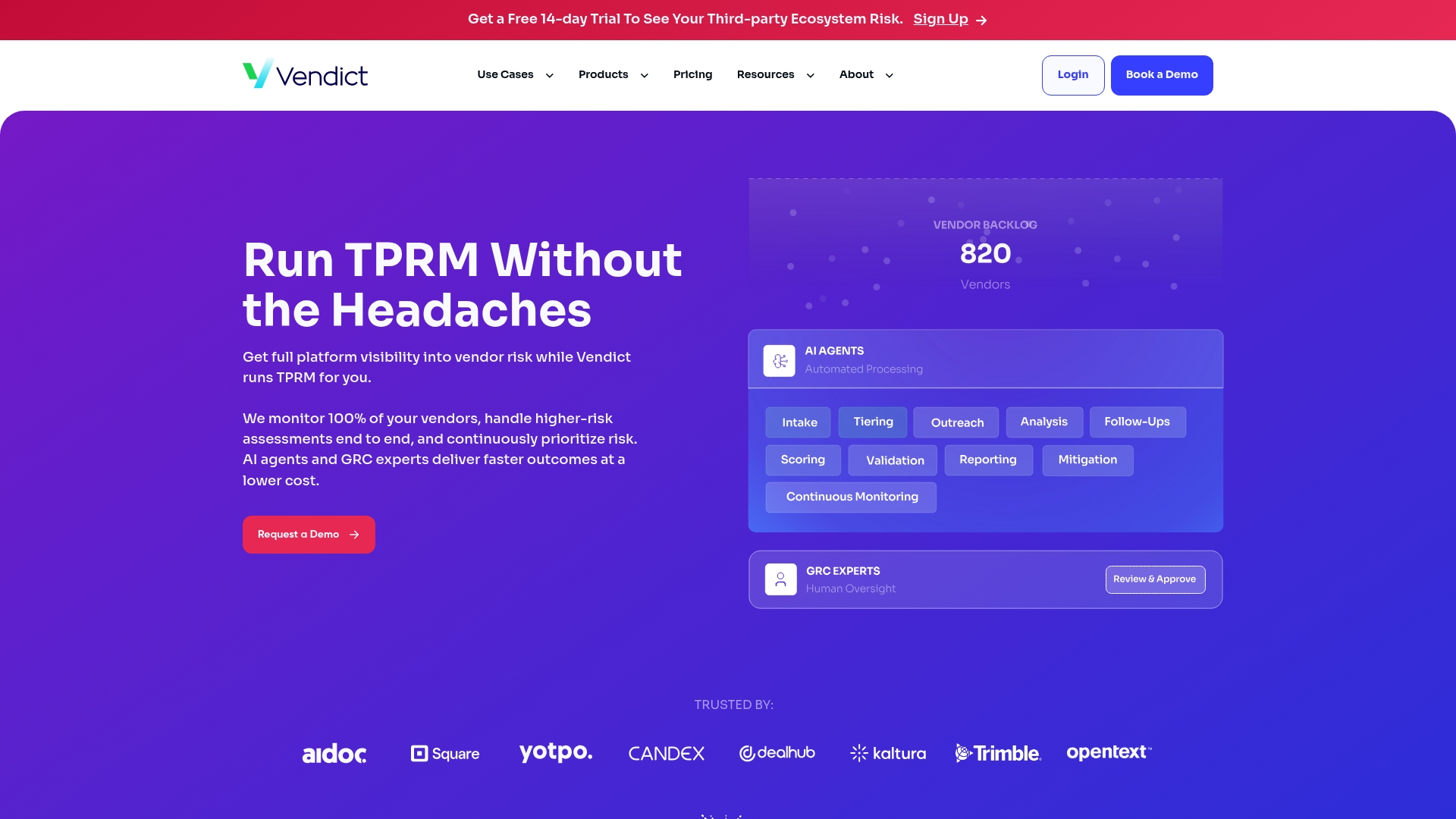
Vendict reports up to 92% faster questionnaire response times for some customers. That figure is vendor reported. The platform emphasizes evidence-backed answers and a centralized trust center to reduce manual verification work.
Core Features
Vendict combines AI agents with human expert validation to run end to end third party risk management workflows, automate questionnaire responses, and monitor vendor risk signals. The platform includes an Interactive Trust Center for publishing certifications and supporting documents, plus tools that map vendor documentation to compliance frameworks like ISO, GDPR, SOC2, and DORA. Automated analysis of vendor documents and generated responses aim to lower repetitive review tasks and speed audits.
Key Differentiator
The vendor positions Vendict as an AI native product built to produce transparent, evidence backed answers with minimal hallucinations. That positioning centers on pairing machine outputs with expert validation to keep results verifiable. The approach targets teams that need audit ready answers rather than purely generative drafts.
Pros
Vendict claims substantial time savings on questionnaire completion, which can reduce the review backlog for large vendor portfolios. The platform emphasizes evidence backed responses and a branded trust center to help security teams present verifiable compliance artifacts to stakeholders. Automation of repetitive tasks reduces manual errors and supports scale when you manage hundreds or thousands of vendors.
Cons
- Limited third party review coverage makes long term user satisfaction hard to verify.
- Integration capabilities are not explicitly documented, so connecting existing asset or ticketing systems may require custom work.
- Publicly available case detail is sparse, so expect to run a pilot to validate fit for complex workflows.
When It May Not Fit
If you need an off the shelf connector list or a prebuilt integration with a specific SIEM or ticketing tool, Vendict may be a poor first choice. The platform looks designed for centralized assessment and trust publishing, not for teams that require many low level native connectors out of the box. Smaller organizations with only a handful of vendors will likely find the platform more than they need.
Who It's For
Mid to large enterprises with extensive vendor ecosystems, especially regulated organizations in healthcare, finance, and technology, will get the most value. Security and compliance teams that must supply audit ready evidence and run high volume assessments will benefit from Vendict’s evidence focus and scalability.
Real World Use Case
A healthcare provider automated vendor security assessments and cut questionnaire turnaround dramatically, using Vendict to host verifiable documentation in a trust center. That speed claim helped the provider reduce backlog and improve stakeholder confidence during audits. The team used the compliance mapping feature to prepare evidence for ISO and SOC2 readiness.
Pricing
Pricing is not specified. Vendor materials indicate pricing is customized by scope and organizational needs. Expect enterprise licensing with customization rather than fixed self service tiers. Plan to request a tailored proposal and include integration and validation requirements in the scoping conversation.
Website: https://vendict.com
Conveyor
At a Glance
Conveyor reports 95%+ accuracy for AI responses and a 98% questionnaire completion rate. The vendor also advertises large time savings when teams automate responses. These claims position Conveyor as a tool built to cut manual work on customer security reviews.
Core Features
Conveyor automates security questionnaire intake, answer generation, and approval workflows using its AI assistant while keeping a searchable knowledge base for repeat questions. The product builds and exposes a Trust Center for customer security documentation and runs self service portals that let buyers retrieve evidence without back and forth. The platform also connects into CRMs and collaboration systems to push security status into sales and support workflows.
Key Differentiator
Conveyor focuses on grounded AI answers that map directly into sales and security systems. That accuracy claim supports the approach by aiming to reduce manual verification of responses. The product emphasizes tying automated answers back to source documents in the Trust Center so reviewers can audit and approve quickly.
Pros
The product groups governance and response automation into a single workflow, which helps risk teams keep answers auditable and linked to evidence. The vendor advertises up to 83% faster questionnaire completion and a threefold increase in review capacity, which explains why teams using the tool report fewer manual handoffs. Conveyor also offers solid SSO support, data loss protections, and broad automation across tools your security and sales teams already use.
Cons
- Setup can be complex for smaller teams. This raises onboarding time and initial resource needs.
- Vendor catalog management could be more comprehensive, making third party tracking harder for some buyers.
- Limited customization for onboarding and the interface frustrates teams that want a tailored experience.
- Advanced enterprise features have a steeper learning curve for compact security teams.
When It May Not Fit
Conveyor suits mid to large technology companies that can allocate engineering or security resources to setup. Small startups with minimal security requests may find the platform heavyweight. Teams that require very deep vendor catalog features or extreme UI customization will likely look elsewhere. If you run a compact compliance team and need plug and play with little configuration, Conveyor may not be the best fit.
Notable Integrations
Conveyor lists integrations with CRM and collaboration vendors to keep security status visible in operational tools. Notable connections include Salesforce, Slack, Jira, Zendesk, DocuSign, Ironclad, Notion, and Google Drive. These connectors support pushing questionnaire status and retrieving documents from living stores of evidence.
Who It's For
Security, compliance, and trust teams at mid sized and large software companies that handle frequent customer security requests will get the most value. Teams that need to embed security checks into sales pipelines and reduce friction for prospects benefit. The product fits groups prepared to invest time in configuration and knowledge base curation.
Real World Use Case
According to the vendor, a SaaS company reduced manual effort by 75% after routing all customer security questionnaires through Conveyor. The sales team gained on demand access to security documentation via the Trust Center, which shortened review cycles. Security reviewers kept answers auditable and reused vetted responses for similar requests.
Pricing
Pricing is based on usage rather than seat count. A free plan is available with limited features and paid plans start at $9,600/year for growing teams. Enterprise pricing is customizable for larger deployments and advanced governance needs.
Website: https://conveyor.com
Comparison of alternatives
Swarm-stack.io earns its distinction through its unique capability to host structured collaboration sessions that combine AI-driven orchestration and real-time expert inputs, resulting in transparent, versioned decision records. This approach contrasts effectively with its competitors, each excelling in specific dimensions suitable for varied organizational needs.
Differentiated Approach to Collaboration
Swarm-stack.io facilitates complex debate sessions moderated by an AI, uniquely incorporating external expert input into the same decision-making framework. This structure contrasts sharply with Iris, which focuses on centralized knowledge-driven response automation for proposals and questionnaires rather than live debate facilitation. Swarm-stack.io’s session recordings provide explicit rationalization—a valuable feature for projects requiring defensible decision trails.
Private Cloud Integration Advantage
Cyberbase forgoes centralized platforms in favor of deploying directly within the user’s private cloud environment on AWS or Azure. This mechanism prioritizes strict data control, suiting enterprises in regulated industries and alleviating concerns over external data handling. While Swarm-stack.io leverages AI orchestration for collaborative planning, the private deployment feature of Cyberbase stands for users requiring stringent data governance.
Best fit
- Teams undertaking strategic projects with demands for transparent debate and recorded rationale will find Swarm-stack.io.
- Security departments in enterprises preferring in-house data processing should consider Cyberbase for its private cloud operations.
- Smaller teams or startups requiring easier onboarding and predefined pricing plans might find Conveyor’s self-service offerings more accessible.
Our pick
Swarm-stack.io is the defined choice where transparent planning processes and recorded decision rationales are critical, supported by its AI-moderated debate framework and integrated expert marketplace. However, for organizations prioritizing data custody in regulated environments, Cyberbase offers a compelling alternative with its private deployment architecture. Organizations may weigh these dimensions per their strategic objectives.
The following table assists in comparing several solutions aimed at improving decision-making, collaboration, and security questionnaire functionalities, emphasizing the unique strengths of each platform.
| Product | Core Feature | Best For | Pricing | Limitation |
|---|---|---|---|---|
| Swarm-stack | AI-driven live team sessions with version control | Teams needing recorded strategic decisions | Pro: $29/month, Team: $99/month | May be complex for simple projects. |
| Skypher | Automated security questionnaires and custom Trust Center | Security teams at tech organizations | Price not published | No public reviews; requires direct sales contact. |
| Cyberbase | Security automation within private cloud environments | Enterprises with Azure/AWS cloud requirements | Free for basic; Custom pricing | Private cloud setup can increase complexity. |
| Iris | AI-driven RFP response generation with citations | Legal and proposal teams at larger companies | Price not published | Limited mobile functionality affects efficiency. |
| Vendict | AI and experts pairing for risk management | Compliance in healthcare, finance, technology | Price not published | Sparse documentation on user reviews. |
| Conveyor | Questionnaire automation linked to CRMs and evidence-based AI | Large software companies handling security | Starting at $9,600/year | Complex initial setup for small teams. |
Facing Challenges With Security Questionnaire Software Collaboration
Security and compliance teams need clear collaboration and recorded rationales to handle complex security questionnaire software projects. Common pain points include lengthy review cycles, misaligned stakeholders, and scattered information that slows down decision-making. Swarm-stack tackles these issues by enabling teams to debate options live, gather insights from AI and experts, and produce versioned decision records. This process reduces uncertainty and delivers ready-to-use plans that fit product, procurement, and security needs.
Swarm-stack helps product teams, project managers, and procurement professionals keep their work transparent and efficient. Invite coworkers or external experts to join sessions via a simple link and capture every argument and decision in real time. See how live collaboration with AI oversight eliminates bottlenecks and confusion.
Learn more about Swarm-stack’s approach and experience a better way to create, document, and track your security questionnaire workflows. Visit Swarm-stack’s homepage to start a free trial and see live sessions in action.
Swarm-stack live collaboration platform
FAQ
What unique feature does Swarm-stack offer for creating versioned decision records?
Swarm-stack generates versioned documents that keep rationale and decision history alongside each revision. This feature allows teams to maintain clarity on past decisions, enhancing transparency during execution. Users can expect a structured approach that helps in tracking and managing changes efficiently.
How does Swarm-stack compare to Skypher for proposal automation?
Skypher excels in automating responses to security questionnaires from a central knowledge base, which can significantly reduce manual workload. Swarm-stack, on the other hand, is designed for structured live sessions that incorporate both AI orchestration and human expert input, making it ideal for complex planning and decision-making scenarios. Teams needing detailed debate-driven collaboration will find Swarm-stack more suitable.
Can I use Swarm-stack for small projects effectively?
Swarm-stack may be overly complex for small or straightforward projects since it focuses on structured debates and extensive documentation. Users with simpler needs might want to consider alternatives that offer more straightforward solutions without the added complexity.
What should I expect from Swarm-stack's structure during live sessions?
Swarm-stack supports structured, debate-driven collaboration with explicit decision records. Every session acts as a moderated discussion where arguments are organized by an AI referee, allowing teams to work through options effectively. Expect thorough documentation and a clear path forward after each session.
How does Swarm-stack facilitate external expert involvement in sessions?
Swarm-stack allows teams to invite external experts into live discussions via a single link, integrating their insights directly into the decision-making process. This capability enriches the debate and outcomes, ensuring that diverse expertise influences the final decision.