Respond to an RFP: A Winning Team Guide for 2026
Learn how to respond to an RFP effectively. Tailor your proposal to client goals and enhance your chances of winning bids in 2026.

A well-structured RFP response built around the client's specific goals, not a recycled template, is what separates winning bids from the pile. Teams that tailor every section to the client's stated requirements and evaluation criteria consistently outperform those relying on generic copy. Structured, team-based responses can yield a high close rate when proposals speak directly to client needs rather than broadcasting capabilities at large.
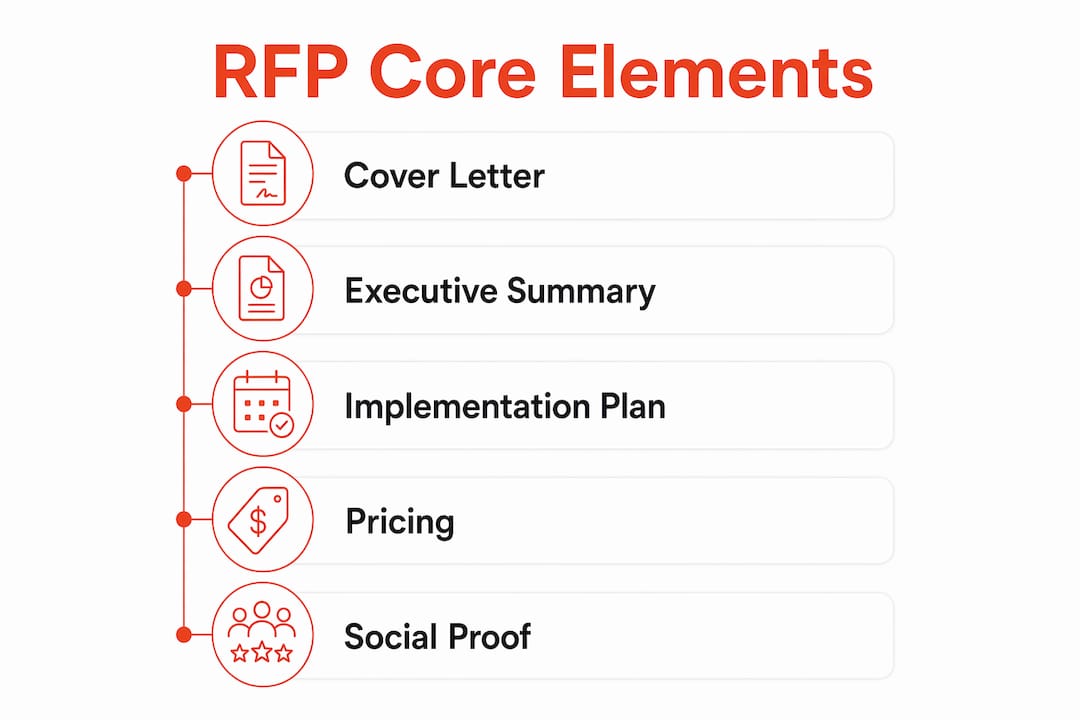
Every strong response to an RFP shares five core elements:
- Cover letter: A client-specific opening that shows you read the RFP carefully and understand what is at stake for them.
- Executive summary: A concise overview of the client's challenges, your proposed solution, and the outcomes they can expect.
- Implementation plan: A detailed timeline with milestones, deliverables, and team assignments tied directly to the client's objectives.
- Pricing and contract terms: A transparent cost breakdown with enough room to negotiate without undermining your value.
- Social proof: Validated case studies and references that prove you have delivered comparable results before.
Beyond structure, the quality of your language and the depth of your collaboration determine whether evaluators keep reading. Direct, specific writing beats vague promises every time. And when your team builds the response together in real time, with subject matter experts contributing early and reviewers catching gaps before submission, the final document reflects a level of alignment that clients can feel.
Table of Contents
- How to respond to an RFP: core elements that win
- Best practices for collaborative RFP response creation
- Common mistakes to avoid when responding to an RFP
- How AI-driven collaboration tools sharpen your RFP response
- What to do after you submit your RFP response
- Key Takeaways
How to respond to an RFP: core elements that win
Effective RFP responses require each of these five components to be complete and persuasive. Here is what belongs in each one.
1. Cover letter
The cover letter is your first impression, and evaluators decide quickly whether to keep reading. Address the client's goals and pain points by name. Show that you understand their priorities, not just the project scope. Keep it to one page and close with a clear statement of why your team is the right fit for this specific engagement.
2. Executive summary
Your executive summary should state what the client wants, where they want to go, and what they need to get there. A useful technique: open with two facts the client already knows are true about their situation. This puts evaluators in an agreeable frame of mind before you present your recommendations. Cover your findings, your proposed approach, and the measurable outcomes they can expect, all in one to two pages.
3. Implementation plan and deliverables
This section is the heart of your proposal. Break the project into phases with specific milestones, dependencies, and deadlines. Clear timelines with realistic schedules increase client confidence and signal that your team has actually thought through the work. List what is included and, critically, what is not. Defining scope boundaries early prevents misunderstandings and scope creep later.

4. Pricing and contract terms
Present pricing as a transparent breakdown, not a single lump sum. Evaluators need to understand exactly what they are paying for. Build in enough margin to negotiate without cutting into your actual costs. Include payment terms, warranties, liability language, and a termination clause. Close with a signature field so the client can act immediately if they are ready.
5. Social proof and references
Case studies do more than any capability statement. Provide specific examples: what the client's problem was, what you delivered, and what the measurable result was. Validated case studies and testimonials build the kind of trust that moves evaluators from interested to convinced. If you have relevant awards, certifications, or quantifiable project metrics, include them here.
Best practices for collaborative RFP response creation
The quality of a response to an RFP reflects the quality of the team process behind it. These practices separate polished, winning proposals from rushed ones.
- Form a cross-functional team early. Pull in subject matter experts, legal, finance, and sales from the start. Early SME collaboration improves technical accuracy and shows evaluators a deep understanding of their challenges.
- Run a structured kickoff meeting. Use an RFP intake form to align the team on scope, roles, timelines, and any risks before anyone starts writing. Ambiguity at the start compounds into errors at the end.
- Assign section ownership. Every part of the proposal needs a named owner. Shared responsibility without clear assignments produces gaps and duplicated effort.
- Write for the client, not for your company. Focus every sentence on the client's needs and the benefits they will receive. Features matter only when they connect directly to a client outcome.
- Review in iterations, not one final pass. Distribute the draft early, collect feedback in rounds, and consolidate edits before the final review. A single last-minute review misses the structural problems that earlier eyes would catch.
- Use direct, specific language throughout. Avoiding generic boilerplate and writing to the client's specific problems increases evaluator favorability. Vague language reads as a lack of preparation.
- Run a compliance check before submission. Verify that every RFP requirement has a corresponding answer. Missing a required section can disqualify an otherwise strong proposal.
Pro Tip: Send your proposal as an interactive document rather than a static PDF. Interactive proposals let you track whether the client opened the document, how many times they reviewed it, and whether they engaged with the pricing section. As Michael Hines from Demand Management, Inc. notes, you must "Establish great rapport and set standards and expectations from the start." An interactive format gives you the data to know when to follow up and what to address.
Common mistakes to avoid when responding to an RFP
Most losing proposals share the same set of avoidable errors. Knowing them is half the fix.
- Generic language. Copying sections from a previous proposal and swapping the client name is obvious to evaluators. Every section should reflect this client's specific goals, not a template.
- Unrealistic timelines. Overpromising on delivery dates destroys credibility the moment a deadline slips. Account for dependencies, approvals, and potential delays before committing to a schedule.
- Incomplete answers. Skipping or partially addressing a requirement signals either carelessness or an inability to meet the spec. Address every detail in the RFP, including the small ones.
- Late SME involvement. Bringing in subject matter experts after the first draft is written means rewriting sections that should have been accurate from the start. Get them in the room at kickoff.
- Typos and formatting errors. A proposal with visible errors tells the evaluator that your team does not sweat the details. Proofreading and compliance checks before submission are non-negotiable steps, not optional polish.
- Over-promising on price. Undercutting your actual costs to win the bid creates a contract you cannot fulfill profitably. Price to deliver the work well, with room to negotiate.
- Unclear cost structure. Bundled pricing without line-item detail forces evaluators to guess what they are buying. Transparency in pricing builds trust; opacity kills it.
How AI-driven collaboration tools sharpen your RFP response
The difference between a proposal built in email threads and one built in a real-time collaborative platform is visible in the final document. Swarm-stack is built specifically for this: teams run structured sessions where AI specialists and human experts contribute simultaneously, each arguing for the strongest version of every deliverable.
For RFP response software teams, the practical advantages are concrete. Version control means every contributor works from the current draft, not a stale email attachment. Decision tracking records why a section was written a certain way, which matters when a client asks a clarifying question weeks later. Deliverable versioning lets you refine the proposal through multiple review cycles without losing earlier drafts.
AI-assisted platforms improve proposal consistency and reduce the coordination overhead that kills momentum on tight deadlines. Swarm-stack's invite-link model means any team member or vetted external expert can join a session without a lengthy onboarding process. The platform exports directly to tools like GitHub and Jira, so technical teams can move from proposal to project execution without rebuilding the plan from scratch.
For teams working on AI-driven RFP workflows, the combination of structured AI input and human oversight produces responses that are both thorough and aligned. AI handles the consistency and coverage; human experts handle the judgment calls that evaluators actually score on. When you need to define web requirements for dev teams as part of a technical RFP section, having both AI-generated structure and expert review in the same session closes the gap between what you know and what you write.
Interactive proposals built on Swarm-stack also give you engagement data after submission. You can see when the client opens the document, which sections they spend time on, and whether they have shared it internally. That information shapes your follow-up strategy in ways that a sent-and-forgotten PDF never could.
What to do after you submit your RFP response
Submission is not the finish line. How you engage after sending the proposal often determines whether you win the deal.
Follow up within two to three business days of submission. A brief, direct message confirms receipt, signals your continued interest, and opens the door for questions the evaluator may have after reading. Do not wait for them to reach out first.
Offer to walk the client through the proposal in a live meeting. Reviewing the document together lets you address concerns in real time and reinforce the points that matter most to their evaluation team. If the client declines a meeting, that itself is useful information about their level of engagement.
Track engagement data if your proposal platform supports it. Knowing that a client has reviewed the pricing section three times tells you where their attention is focused and what objection to prepare for. Use that data to personalize your follow-up, not to send generic check-in emails.
After the decision, run a post-mortem regardless of the outcome. What sections generated questions? Where did the timeline estimates hold up? Which SME contributions made the biggest difference? Each RFP response is a data point for improving the next one.
Key Takeaways
A structured, client-specific RFP response built through real-time team collaboration consistently outperforms generic proposals and positions your team to close at a significantly higher rate.
| Point | Details |
|---|---|
| Five core elements | Every response needs a cover letter, executive summary, implementation plan, pricing breakdown, and social proof. |
| Tailor every section | Generic language loses bids; address the client's specific goals and evaluation criteria throughout. |
| Involve SMEs early | Early subject matter expert input improves technical accuracy and raises evaluator scores. |
| Use AI collaboration | Platforms like Swarm-stack provide version control, decision tracking, and real-time multi-contributor editing. |
| Follow up after submission | Contact the client within two to three business days and offer a live review meeting to address questions. |
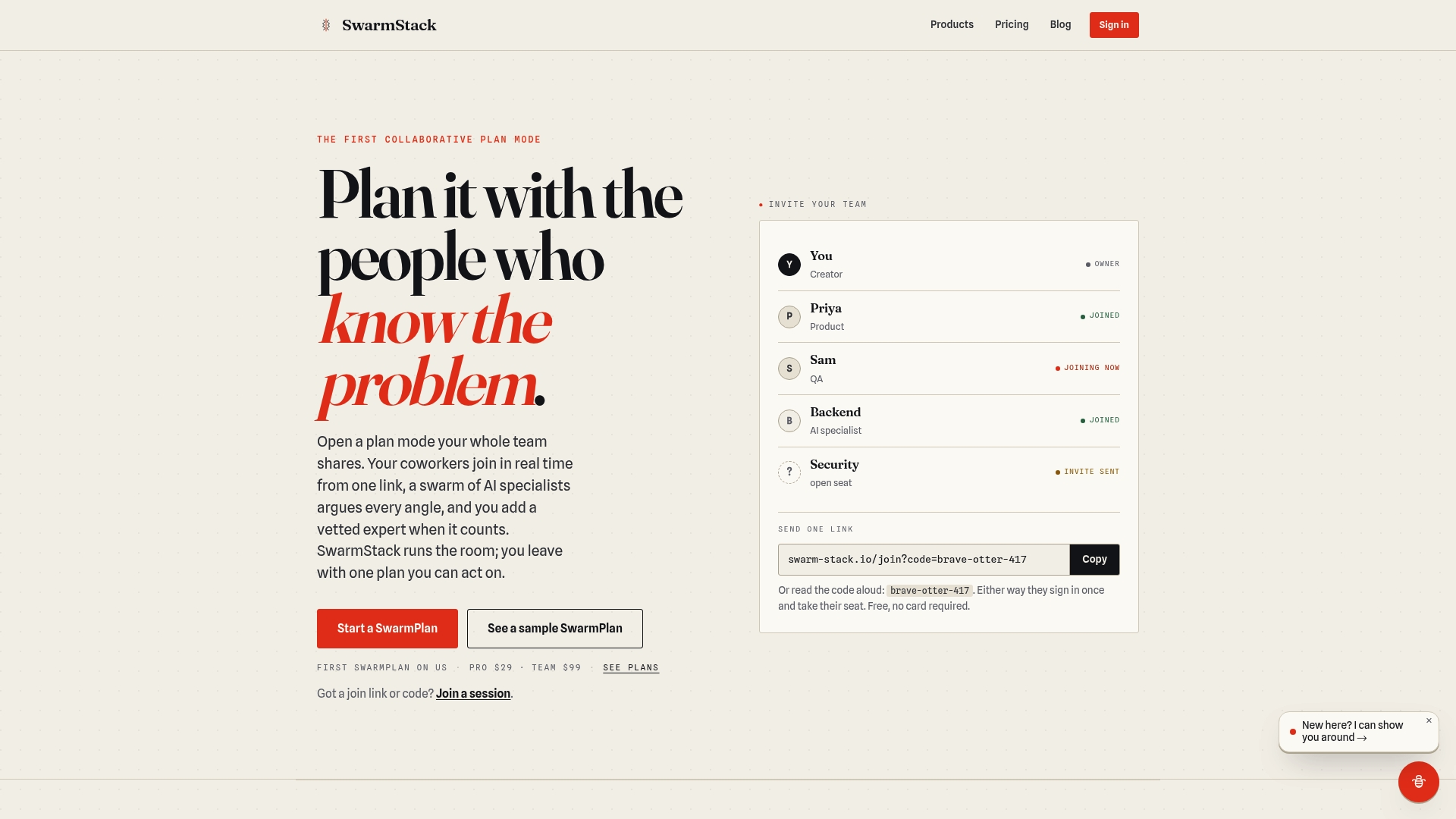
Swarm-stack brings your entire team, including AI specialists and vetted human experts, into a single structured session to build RFP responses that are thorough, aligned, and ready to submit. No more version confusion, no more last-minute rewrites. See how the SwarmRFP framework works, or explore pricing and plans to get your team started.