Buyer RFP Checklist: 25 Items, Published Weights, Collaboration Tools
Cap requirements at 25 items, publish evaluation weights, and use templates plus a requirements-to-rubric crosswalk to draft defensible buyer RFPs faster.

This checklist gives you the exact artifacts to draft, publish, evaluate, and award a buyer-side RFP without protests, rework, or a stalled vendor pool: a scoped project plan, a requirements matrix capped near 25 line-items, a published evaluation rubric, and clear submission rules. Start now by assembling a cross-functional team and locking your target contract start date, since everything else on the timeline works backward from it.
TL;DR:
- A well-structured RFP process requires a scope of work that describes outcomes rather than steps, with a requirements matrix capped at 25 items for clarity.
- Early involvement of procurement, technical, legal, finance, and end-user teams is crucial, with each reviewer’s lead time built into the project plan as formal gates.
- Publishing evaluation criteria and weights before proposals arrive helps vendors focus their efforts and ensures a consistent scoring process.
- Clearly defined submission rules, fixed Q&A periods, and structured proposal templates reduce disputes and improve vendor responses.
- Maintaining detailed documentation at each phase and conducting collaborative drafting sessions streamline the process and prevent costly delays.
Table of Contents
- What Does A Buyer RFP Checklist Actually Cover?
- Who Should Be On Your RFP Team, And By When?
- How Do You Write Scope And Keep Requirements Under 25 Items?
- What Evaluation Criteria And Weights Should You Publish?
- What Submission And Q&A Rules Prevent Disputes?
- How Do You Score Proposals And Document the Decision?
- What Belongs On Your Post-Award Checklist?
- Why A Checklist Beats Improvising An RFP From Memory
- Draft Your RFP Collaboratively Instead of Passing It Around By Email
- Where To Go Next: Templates And Primary Guidance
- Sources
What Does A Buyer RFP Checklist Actually Cover?
A buyer-side RFP checklist runs through six phases, and each one produces a specific document you'll reference later, whether during evaluation, an award dispute, or your next procurement cycle.
- Plan: project plan, stakeholder list, budget range, and contract start date
- Draft: scope of work, requirements matrix, evaluation rubric, submission instructions
- Advertise & Q&A: published RFP, vendor Q&A log, addenda if requirements change
- Evaluate: scoring sheets, evaluator notes, shortlist rationale
- Award: contract terms, notification letters, signed agreement
- Post-award: kickoff plan, vendor debriefs, lessons-learned file
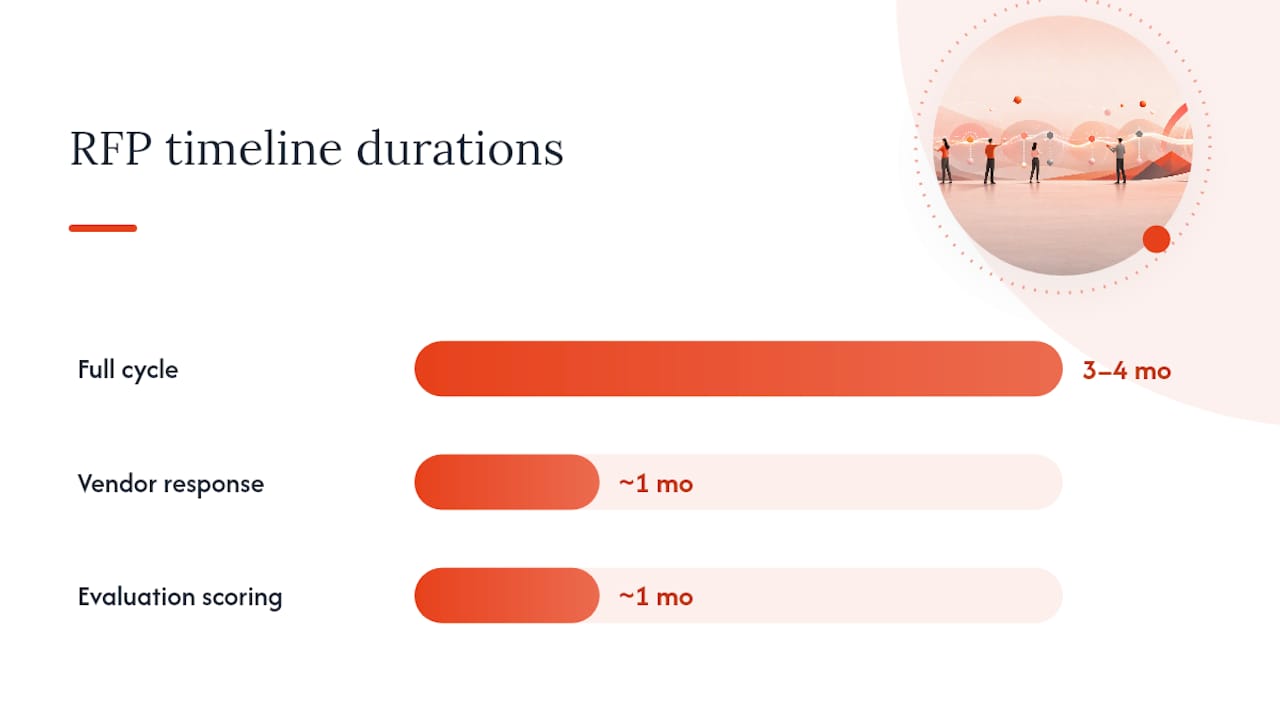
A full cycle typically runs 3 to 4 months, with about a month for vendors to respond and another month for your team to score submissions. That response window matters more than most buyers realize. Compress it to two weeks and you'll get thinner proposals from your best vendors, the ones with the pipeline to be selective about which RFPs they bother answering carefully.
Keep every phase's output in one shared file or workspace. A requirements matrix template built early makes the evaluation phase almost mechanical instead of a scramble.
Who Should Be On Your RFP Team, And By When?
Get the right people in the room before you write a word of scope. Skipping this step is the single most common reason RFPs get rewritten mid-cycle.
- Procurement lead: owns the process, timeline, and vendor communication
- Project sponsor: has budget authority and signs off on the final award
- Subject matter experts: write technical requirements and evaluate responses
- IT and security: review integration, data, and compliance requirements
- Legal: reviews contract terms, liability language, and insurance requirements
- Finance: confirms budget and payment terms
- End users: validate that requirements reflect actual daily use
- Contract approver: the final signature authority, often different from the sponsor
Once you know who's involved, ask each reviewer how much lead time they need, then build those windows into the project plan as formal gates rather than informal check-ins. Early involvement from IT, legal, and finance during requirements definition catches technical mismatches before they surface after award, not during a contentious change order six weeks in.
To set the timeline, start with your target contract execution date and work backward: two to four weeks for vendor responses, another two to four weeks for evaluation, and a buffer for demos or negotiation.
Pro Tip: Add every approval gate to the project plan as a dated milestone, not a task on someone's list. A gate with no deadline gets deprioritized the moment something else lands on that reviewer's desk.
How Do You Write Scope And Keep Requirements Under 25 Items?
Write the scope of work like a job description, not a task list; for practical guidance on implementation, see How to Deploy PDF Software Across Your Organization. Describe the outcome you need, the deliverables that prove it happened, and the constraints vendors must work within. What you should avoid is prescribing every step of how to get there. Overly prescriptive scopes box vendors into your own assumptions and strip out the specialized approaches you're paying them to bring.
Build the requirements matrix as a simple structure:
- List the requirement in plain, testable language (not "robust reporting" but "generates exportable reports in CSV and PDF within the application").
- Assign a priority tier: Must, Should, or Nice. Must-have items disqualify a proposal if unmet; Should items score heavily but don't eliminate a vendor; Nice items break ties.
- Cap the list at roughly 25 line-items. Beyond that, evaluators lose focus on what actually differentiates vendors, and administrative burden crowds out real analysis.
- Attach acceptance criteria to each Must-have item so there's no ambiguity about what "meets" the requirement means during scoring.
This structure does double duty. It keeps your evaluation clean, and it tells vendors exactly which requirements are negotiable and which aren't, which cuts down on the clarifying questions that eat into your Q&A window.
What Evaluation Criteria And Weights Should You Publish?
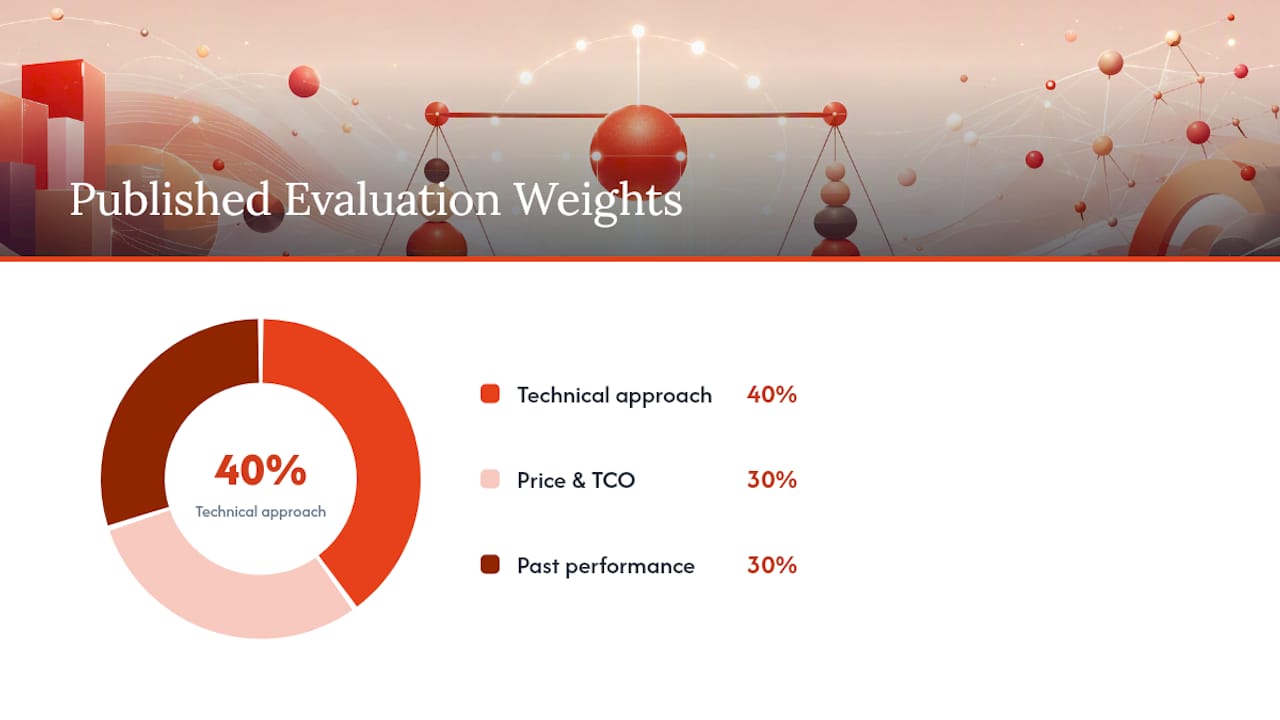
Publish your evaluation factors and their percentage weights inside the RFP itself, before a single proposal comes in. This isn't just good practice. Under federal source selection procedures, evaluators can only score proposals against criteria that were disclosed to bidders in advance, and that principle holds up as a defensibility standard well beyond government contracting.
A common weight split looks something like this:
- Technical approach and requirements fit: 40%
- Price and total cost of ownership: 30%
- Past performance and references: 30%
Publishing weights up front doesn't just protect you legally. It also tells vendors where to invest their proposal effort, which usually produces sharper, more relevant responses instead of generic boilerplate padded with everything a vendor has ever done.
Once weights are set, build a requirements-to-rubric crosswalk: each line-item in your matrix maps to a specific evaluation factor and point value. Hand evaluators a shared scoring template built from that crosswalk rather than a blank spreadsheet. It cuts down the variation you get when five people interpret "technical fit" five different ways.
What Submission And Q&A Rules Prevent Disputes?
State your deadline down to the date, time, and time zone, plus your accepted file format and the exact submission portal or email address. Decide in advance how you'll handle a proposal that arrives one minute late (in most procurement practice, it's disqualified, no exceptions) and put that rule in writing.
- Run a fixed Q&A window, typically closing five to seven business days before submissions are due
- Post every question and its answer to all bidders, anonymized, not just to the vendor who asked
- Build in enough buffer that answers land with time for vendors to actually revise their proposals
- Provide structured response templates, pricing tables, a technical response outline, and a reference form, so every proposal arrives in a comparable format
Vendors who get vague or late answers assume the process is disorganized, and the strongest ones will simply decline to bid next time.
How Do You Score Proposals And Document the Decision?
- Run an administrative pass/fail check first. Missing signatures, incomplete pricing, or a blown deadline eliminates a proposal before anyone reads the technical volume.
- Score independently, then compare. Each evaluator applies the rubric on their own before the group discusses scores, which keeps one strong personality from anchoring everyone else's numbers.
- Identify the competitive range. If two or three proposals are close, run structured discussions or a Best and Final Offer (BAFO) round with a single, published cutoff date for revised terms.
- Keep every scoring sheet, evaluator comment, and rationale memo. If price and quality trade off against each other in the final decision, write down why in a short paragraph while it's still fresh.
That paper trail is what protects the award if a losing vendor questions the outcome, and it's also what saves your team from re-litigating the same argument the next time this vendor category comes up for renewal.
What Belongs On Your Post-Award Checklist?
Winning the RFP is the midpoint, not the finish line. Finalize contract terms, confirm milestones and service-level agreements match what was actually proposed, and schedule a kickoff call before the ink is dry.
- Send timely, substantive debriefs to unsuccessful vendors who made the competitive range. They're often the vendors you'll want bidding on your next RFP
- Document what was said in each debrief in case questions come up later
- Capture lessons learned while the process is still fresh: what confused vendors, which requirements needed clarification, where the timeline was too tight
- Update your requirements matrix template, scoring rubric, and timeline benchmarks before you file the RFP away
Skip this step and you'll rebuild the same checklist from scratch next time, mistakes included.
Why A Checklist Beats Improvising An RFP From Memory
Most RFP delays trace back to the same root cause: someone skipped a step early and the team paid for it during evaluation, when a fix costs three times as much. A disciplined checklist, fixed scope before drafting, published weights before scoring, catches scope creep and vague requirements before they turn into a stalled award or a vendor protest.
What's changed the RFP process most in the last few years isn't the checklist itself, it's how teams build it. Structured, real-time collaborative sessions let procurement leads, SMEs, and legal argue out requirements together instead of passing a document through six rounds of email edits. The format, where AI specialists and human reviewers work through the same draft in a live session, tends to surface conflicting assumptions (What does "robust support" actually mean to legal versus IT?) far earlier than a traditional review cycle does.
— Cody
Draft Your RFP Collaboratively Instead of Passing It Around By Email
Most RFP drafts die a slow death in email threads, one reviewer's redline overwriting another's, legal and procurement working from different versions by day three. This is replaced with structured, real-time sessions where your team and AI specialists work through the scope, requirements matrix, and evaluation rubric together, in one shared, versioned document.
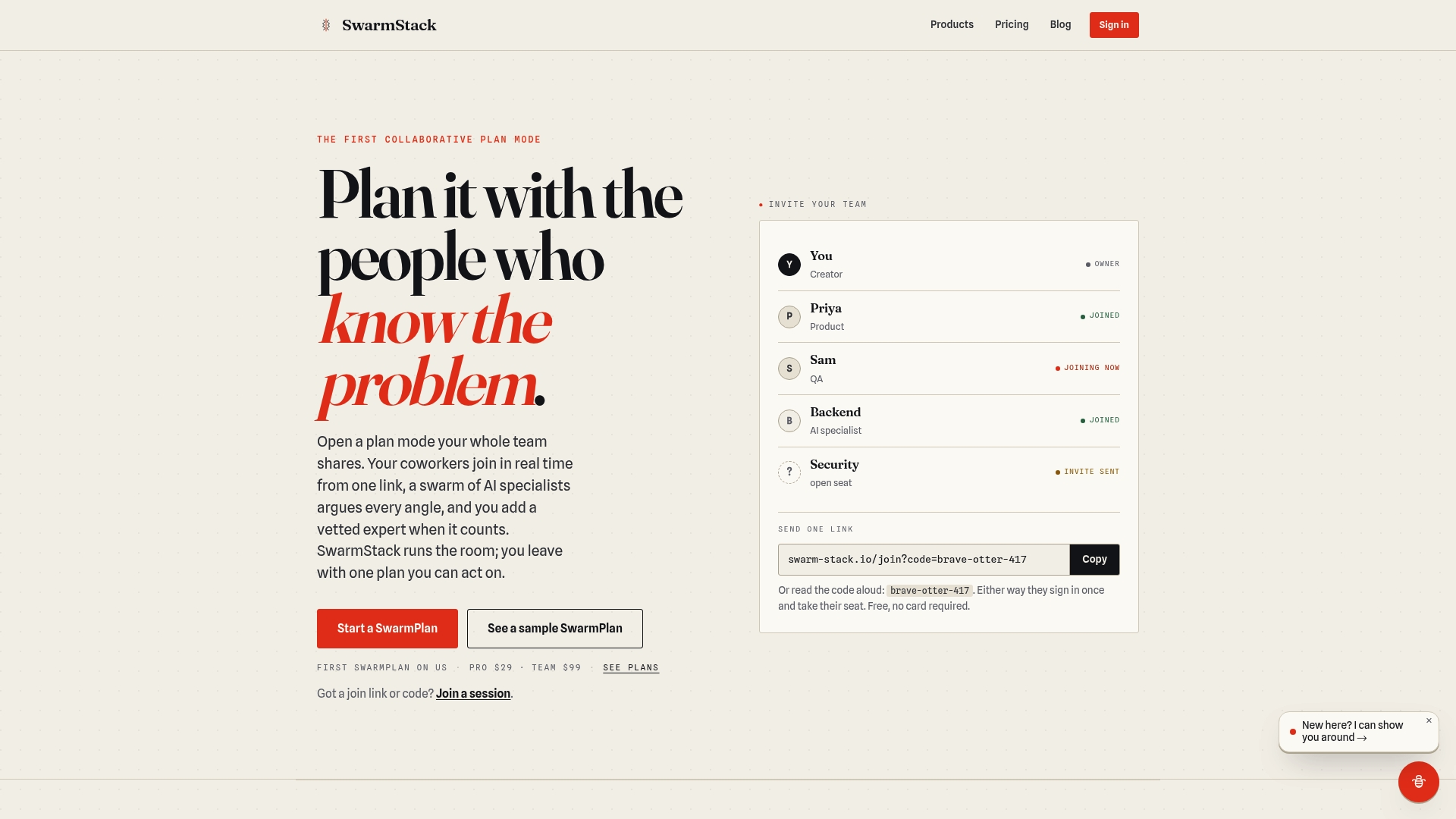
Every deliverable, from the scope of work to the scoring rubric, gets tracked through its revisions, so you can see exactly what changed and why before you publish. Invite your procurement lead, SMEs, and legal reviewer with a single link, run the session, and export a finished draft to the tools your team already uses. It's one option for building the artifacts this checklist calls for, not a required step, but if your last RFP took four rounds of email to finalize, it's worth trying on the next one. Start a session at Swarm-stack and see how far a first draft gets in one sitting.
Where To Go Next: Templates And Primary Guidance
For deeper reference: the GovLab RFP guidebook on results-driven scoping, FAR Subpart 15.2 on evaluation rules, and Swarm-stack's scope of work template for drafting outcome-focused requirements.
Sources
- Guidebook: Crafting a results-driven request for proposals (RFP) — GovLab / Harvard
- FAR Subpart 15.2 — Source Selection Procedures
- How to run an RFP process | Step-by-step guide — Sievo