Video Production Government Contracts: RFP Playbook for Teams
Unlock the potential of video production government contracts. Register at SAM.gov and master proposals to secure lucrative federal projects.

To win U.S. video production government contracts, register in SAM.gov first, then submit a proposal that maps line-by-line to the Performance Work Statement (PWS), locks down IP rights, and backs every claim with documented past performance.
TL;DR checklist:
- Register in SAM.gov and confirm your Unique Entity ID (UEI) and CAGE code
- Set your NAICS code to 512110 (Motion Picture and Video Production)
- Assemble your showreel and past performance narratives before you search for solicitations
- Monitor SAM.gov Contract Opportunities for RFI, RFQ, and RFP notices under NAICS 512110
Federal video production solicitations range from small task orders to multi-award IDIQs with ceilings as high as $5,000,000. The U.S. Army Research Laboratory's recent IDIQ for video production and streaming services carried a $40 million ceiling and was set aside for small businesses under NAICS 512110. That scale is real, and it's accessible if your paperwork is clean and your proposal is built around the PWS.
Table of Contents
- What do you need to register before you can bid?
- Where do government video solicitations actually appear?
- How do you write a compliant proposal for government video work?
- What pricing models and contract terms should you expect?
- How do you prove you can actually deliver?
- What kills proposals and how do you avoid it?
- What does the procurement timeline look like?
- How does Swarm-stack help teams manage government video bids?
- Key Takeaways
- The part most teams get wrong about government video bids
- Swarm-stack makes government bid planning faster and more defensible
- Useful sources
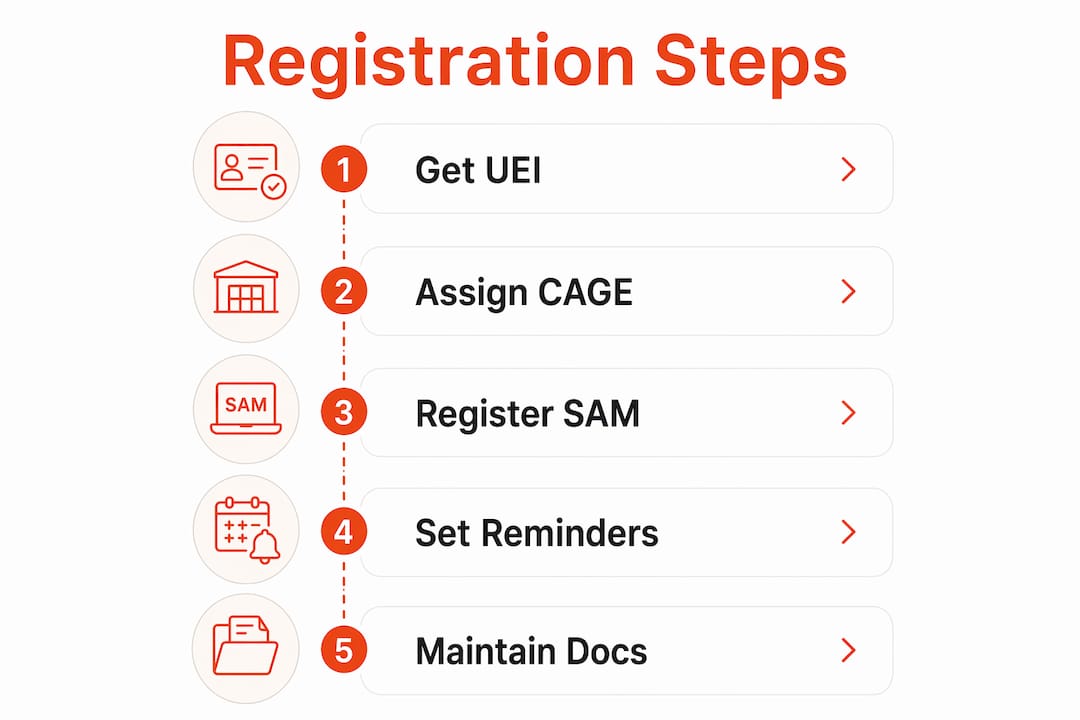
What do you need to register before you can bid?
All vendors must be registered in SAM.gov to participate in any federal solicitation. No registration, no bid. Here's what to confirm before you touch a solicitation:
- Unique Entity ID (UEI): Replaced the DUNS number; issued free through SAM.gov during registration
- CAGE code: Assigned automatically once SAM registration is active; required on every federal submission
- NAICS 512110: The primary code for motion picture and video production; confirm it appears in your SAM profile and matches the solicitation
- Small-business status: Many video solicitations are set aside under FAR 19.5 for total small business participation; verify your size standard against the $40 million SBA threshold for NAICS 512110
- Annual renewal: SAM registrations expire yearly; a lapsed registration disqualifies you automatically
Pro Tip: Set a calendar reminder 60 days before your SAM registration expires. Renewal can take two weeks, and a lapsed registration will get your bid rejected on administrative review before an evaluator reads a single page.
Store your UEI confirmation, CAGE assignment letter, and renewal receipts in a versioned folder inside your project plan. When a contracting officer asks for proof of registration during source selection, you want that document in under 60 seconds.
Where do government video solicitations actually appear?
SAM.gov Contract Opportunities is the official federal channel. Set up saved searches filtered by NAICS 512110, PSC code T006 (Film/Video Tape Production), and your preferred set-aside type. Beyond SAM, check agency-specific portals and state procurement systems like Colorado's BIDS or Michigan's SIGMA for public-sector video projects.
Understanding notice types saves you from wasting a week on a response you were never meant to submit:
- RFI (Request for Information): Market research only; no award follows. Respond to shape the requirement, not to win work.
- RFQ (Request for Quotation): Simplified acquisition; typically under $250,000. Faster turnaround, less documentation.
- RFP (Request for Proposals): Full competitive acquisition. Requires a technical volume, past performance, and price.
- IDIQ/Task Orders: An umbrella contract with a ceiling value; individual task orders fund specific projects. The Army Research Lab's recent solicitation (W911QX25QA002) used exactly this structure.
- GSA MAS (Multiple Award Schedule): A pre-competed vehicle. Once on schedule, agencies can order directly without a full competition.
Quick pursue/pass checklist: Does the NAICS match 512110? Is the set-aside type one you qualify for? Is the period of performance realistic given your current capacity? Can you document at least two comparable past performance references? If you answer no to any of these, pass and spend the time on a better-fit opportunity.
How do you write a compliant proposal for government video work?
The proposal must mirror the PWS. Evaluators score against stated criteria, so a technically brilliant video concept that doesn't address a PWS task is a zero on that line item.
Sample proposal outline:
- Executive summary (1 page): state your understanding of the requirement, your key differentiators, and your small-business status
- Technical approach: describe your production methodology task-by-task against the PWS; include a sample storyboard or treatment for the primary deliverable
- Staffing plan: list labor categories (director, producer, editor, motion graphics) with résumés keyed to each PWS task
- Management approach: explain quality control, revision cycles, and communication cadence with the contracting officer
- Past performance: three references with client name, contract number, period of performance, dollar value, and a measurable outcome
- Price volume: labor-hour breakdown by CLIN, material costs, travel estimate, and any optional line items
DD Form 1423 is the standard data item description form. When a solicitation requires it, every deliverable gets its own DD Form 1423 entry specifying format, frequency, and distribution. Miss one and you fail administrative review.
State-level bids increasingly score multilingual and accessibility services as a separate evaluation factor. If the solicitation mentions subtitles, voiceover, or Section 508 compliance, price and describe those capabilities explicitly in your technical volume.
Administrative compliance checklist:
- File naming matches solicitation instructions exactly
- Page limits respected per volume
- All required attachments included (DD Form 1423, price list, past performance references)
- Proposal submitted through the designated portal before the stated deadline
What pricing models and contract terms should you expect?
Most federal video work is awarded as firm fixed-price (FFP), which puts schedule and cost risk on you. Build your estimate conservatively. Cost-reimbursement contracts are rare for commercial video services.

Multi-award IDIQs are common for larger agencies. The contract establishes a ceiling and a pool of awardees; individual task orders then compete among pool members. Getting on the IDIQ is the hard part. Winning task orders afterward is faster and cheaper than full competitions.
| Pricing line item | What to include |
|---|---|
| Labor | Hours × loaded rate per labor category |
| Materials | Equipment rental, props, licensed music, stock footage |
| Travel | Per diem, lodging, mileage or airfare per GSA rates |
| Post-production | Editing, color, graphics, encoding, captioning |
| Contingency | Typically 5–10% on materials and travel |
| Optional CLINs | Additional revision rounds, extended licensing, foreign language versions |
For multi-year contracts, price adjustment clauses are standard. Some contracts link annual rate increases to the Consumer Price Index for Urban Wage Earners and Clerical Workers (CPI-W). Model at least two escalation scenarios in your pricing before you submit.
Pro Tip: If the solicitation allows alternate pricing, offer a per-deliverable rate alongside your labor-hour estimate. Agencies that produce recurring content (training videos, public affairs clips) often prefer a per-minute or per-deliverable structure because it simplifies their budget tracking. Propose it as an optional CLIN, not a replacement.
On IP rights: state explicitly in your price volume which rights you are granting. Offer a government-use license at minimum; if the agency wants full ownership, price that separately. Failing to address rights upfront is one of the most expensive mistakes in federal video work.
How do you prove you can actually deliver?
Evaluators weigh technical approach and past performance heavily. A polished showreel matters, but a showreel without context is just pretty footage.
- Showreel: Keep it under three minutes; lead with work that matches the solicitation's content type (training, documentary, public affairs). Include timestamps tied to PWS task categories where possible.
- Past performance narratives: For each reference, state the client, contract number, period of performance, dollar value, and one measurable outcome (e.g., "produced 12 training modules delivered on schedule with zero revision cycles exceeding contract limits").
- Staffing résumés: One page per key person, keyed to the labor category in your price volume. Evaluators match résumés to PWS tasks.
- Sample deliverables: Include a short sample treatment or storyboard for the primary deliverable type. It shows process, not just output.
The Army PAD treats video production as a specialized discipline. Agencies that use specialized acquisition offices expect proposals that reflect that depth. Generic media-company language signals commodity thinking.
Pro Tip: For large media files, use a secure shared drive with a direct link and an expiration date. Never email raw footage. Note the access method in your proposal's submission instructions section so the contracting officer doesn't have to ask.
What kills proposals and how do you avoid it?
The Army PAD explicitly flags the risk of general contracting shops buying video without visual information expertise. That same risk applies to vendors: proposals that treat video as a commodity rather than a specialized service fail on technical evaluation.
The most common failure modes:
- PWS noncompliance: Proposal doesn't address every task; evaluators score it zero on those items
- Incomplete DD Form 1423: Missing deliverable entries trigger administrative rejection
- Vague IP terms: No rights clause means the agency defaults to the most restrictive interpretation, which often means you retain nothing useful
- Thin past performance: One reference, no contract numbers, no measurable outcomes
- Scope creep in pricing: Lump-sum prices with no labor breakdown invite downward negotiation and audit risk
Pro Tip: Run a peer compliance review the day before submission. One person reads the PWS aloud; a second person confirms each task is addressed in the proposal. It takes 90 minutes and catches the errors that cost you the award.
What does the procurement timeline look like?
Government procurements move on their own clock. Plan for this sequence:
- Solicitation posted: SAM.gov notice goes live; Q&A period opens (typically 10–14 days)
- Q&A closes: Final amendment issued; proposal due date confirmed
- Proposals due: Submission deadline; late submissions are rejected
- Evaluation period: Technical and price review (4–12 weeks depending on complexity)
- Best-value determination: Source selection authority makes award decision
- Award notice: Posted on SAM.gov; unsuccessful offerors may request a debrief
- Performance begins: Task order issued; deliverables schedule activates
Primary cost drivers on government video projects: pre-production research and scripting, on-location shoot days (travel and per diem add up fast), post-production editing and motion graphics, localization (subtitles and voiceover for multilingual requirements), rights clearance for licensed music or archival footage, and any security requirements for access to restricted facilities.
Model your invoicing cadence early. Most government contracts pay on net-30 terms after acceptance of deliverables. Build that lag into your cashflow plan.
How does Swarm-stack help teams manage government video bids?
Swarm-stack speeds compliant RFP and bid planning by combining structured AI-driven sessions, versioned deliverables, and live collaborative review. For teams preparing federal video proposals, that means fewer compliance gaps and faster turnaround on complex submissions.
Specific features that map directly to government bidding needs:
- Versioned project plans: Track every revision to your PWS mapping, price list, and past performance narratives; know exactly which version was submitted and when
- Structured interview sessions: Multiple AI specialists and human experts argue each section of your proposal, surfacing gaps before the contracting officer finds them
- Collaborative compliance review: Invite your whole team via a single link; run the peer compliance check described above inside the platform with decision tracking
- RFP drafting templates: Swarm-stack's video production RFP guide provides a starting framework you can adapt to any PWS structure
- Export to workflow tools: Push finalized proposal sections directly to GitHub or Jira for handoff to production teams post-award
For buyer-side teams writing the RFP rather than responding to one, Swarm-stack's structured sessions help you define evaluation criteria, draft PWS language, and version the solicitation through multiple review cycles without losing track of changes.
Key Takeaways
Winning federal video work comes down to three things: clean registration, a proposal that mirrors the PWS line-by-line, and past performance evidence that gives evaluators something concrete to score.
| Point | Details |
|---|---|
| Register and maintain SAM | Keep your UEI, CAGE, and NAICS 512110 current; a lapsed registration disqualifies your bid automatically. |
| Map every proposal element to the PWS | Evaluators score against stated tasks; an unaddressed PWS item is a zero, not a gap. |
| Secure IP rights explicitly | State the rights you are granting in your price volume; vague terms default against you. |
| Document past performance with specifics | Include contract numbers, dollar values, and measurable outcomes for each reference. |
| Use Swarm-stack for versioned bid planning | Swarm-stack's collaborative sessions and versioned deliverables reduce compliance gaps before submission. |
The part most teams get wrong about government video bids
Most teams that lose federal video proposals don't lose on price. They lose because they wrote a great media pitch instead of a compliant government proposal. The instinct to lead with creative vision is exactly wrong here. Evaluators are checking boxes before they watch a single frame of your showreel.
The other thing teams consistently underestimate is IP. Agencies that produce training content, public affairs material, or congressional briefing videos want to reuse that footage for years. If your proposal is silent on rights, the contracting officer will interpret the FAR in the agency's favor, and you'll find yourself negotiating a license after award from a position of zero leverage. Price the rights conversation into your proposal from day one.
One practical recommendation: before you submit anything, run your proposal against the PWS with a checklist in hand. Every task in the PWS should have a corresponding paragraph in your technical volume. If it doesn't, you're not done yet.
Swarm-stack makes government bid planning faster and more defensible
Federal video bids fail at the planning stage, not the production stage. Swarm-stack gives your team a single workspace to draft PWS-aligned proposals, run structured compliance reviews, and version every document from first draft to final submission. Instead of chasing attachments across email threads, your team works in real-time with AI specialists and human experts arguing each section until it's tight.
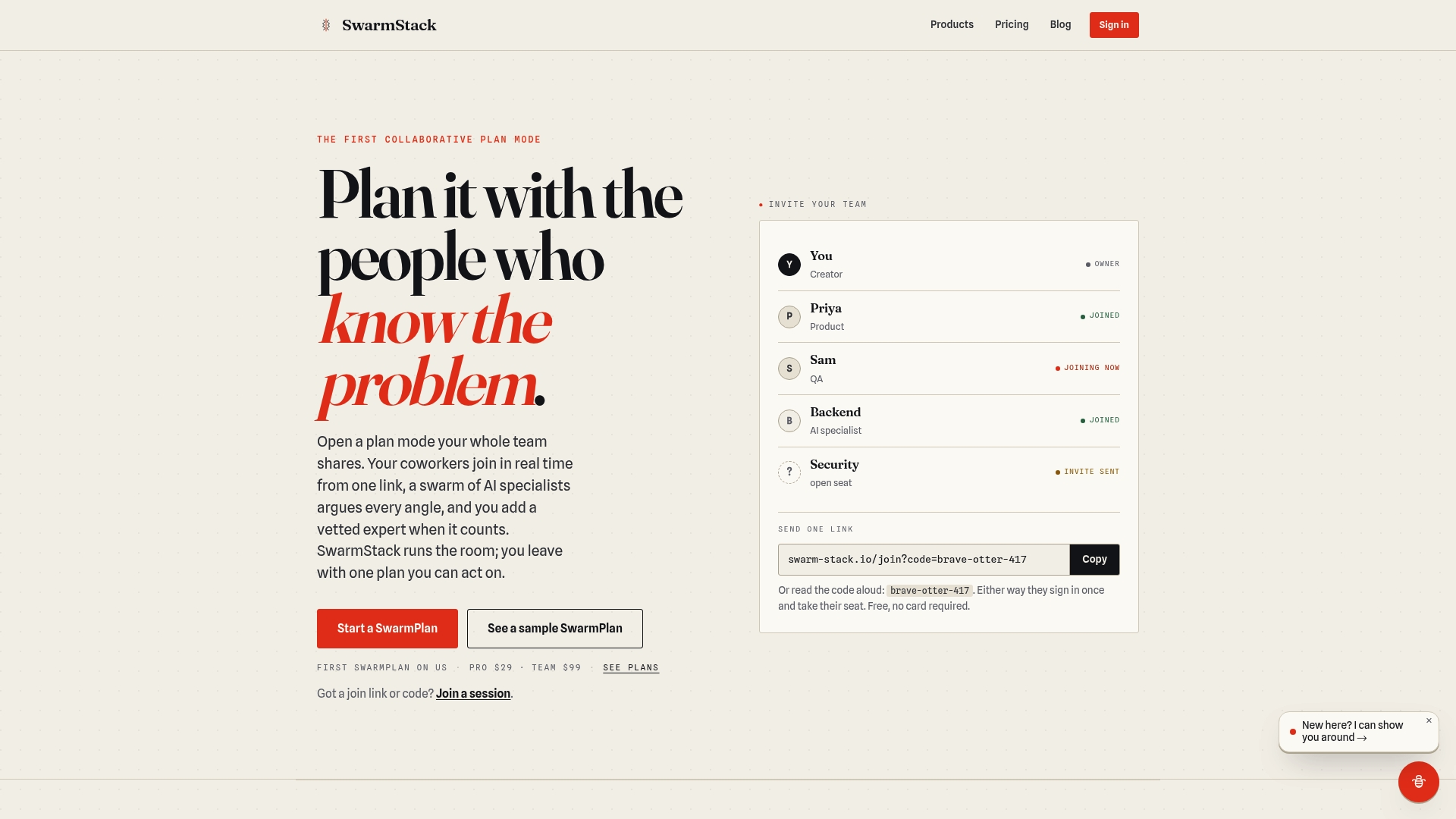
The versioned deliverable system means you always know which proposal draft went out the door and what changed between rounds. For post-award work, the same platform tracks deliverable milestones and keeps your invoicing documentation clean. Start your first collaborative bid session on Swarm-stack and see how much faster a compliant proposal comes together when the whole team is in the same room.
Useful sources
Official references you'll need when preparing federal video bids:
- SAM.gov: Vendor registration, UEI issuance, and the Contract Opportunities workspace for all federal solicitations
- SAM.gov Contract Opportunities: Search and save alerts by NAICS 512110 and PSC T006
- Production Acquisition Division (PAD): Army's authorized activity for video production contracting; guidance on specialized acquisition requirements
- Video Production BPA — SAM.gov: Live example of a federal video BPA solicitation with PWS and price list attachments
- SwarmStack RFP guide for video production: Practical templates for PWS mapping and proposal structure
- DD Form 1423: The standard data item description form required for deliverable specifications; obtain the current version through the DoD Forms Management Program
For contract vehicle details and pricing adjustment clauses, consult the FAR Part 16 (contract types) and FAR Part 52.216 (economic price adjustment clauses) directly. State-level solicitations vary by jurisdiction; check your target state's procurement portal for applicable forms and submission requirements.