Best AI Planning Tools for Product and Procurement Teams
Discover the best AI planning tools for product and procurement teams. Learn how to effectively pilot your chosen platform for success.

For teams evaluating collaborative AI planning platforms, the right move is to pick a versioned, session-based platform fitted to your existing corpus and governance model, then run a controlled pilot on one project type before committing to a full rollout.
Start here:
- Scope the pilot tightly. Pick one repeatable project type (RFP drafts, quarterly roadmaps, or product strategy sessions) where you already have past deliverables to feed the system.
- Audit your data first. Identify where project documentation lives. Scattered spreadsheets can add months to your readiness timeline; consolidated project data produces wins within weeks.
- Invite stakeholders via a single session link. Confirm who owns decisions vs. who drafts, before the first session runs.
- Record one baseline metric now. Time-to-first-draft, number of revision rounds, or stakeholder sign-off cycle length. You need a number to compare against at day 60.
The evidence is consistent: the tool is rarely the bottleneck. Your data foundation and governance model are.
Key Takeaways
The most effective approach to AI-assisted planning is to pick a versioned, corpus-grounded platform, run a controlled pilot on one high-reuse project type, and measure a single baseline metric before expanding.
| Point | Details |
|---|---|
| Data foundation first | Audit where project documentation lives before evaluating any platform. |
| Pilot one project type | Start with RFP drafts or roadmaps where past deliverables already exist. |
| Weight procurement criteria correctly | Score integration and data handling above price in vendor evaluation. |
| Human checkpoints are non-negotiable | Pricing, commercial terms, and go/no-bid decisions must stay with a human approver. |
| Start with Swarm-stack | Swarm-stack maps to every must-have on the checklist and offers a free-tier trial with direct Jira and GitHub exports. |
Table of Contents
- What do "AI planning tools" actually mean for B2B teams?
- Core feature checklist: must-haves vs. nice-to-haves
- How do you evaluate and choose the right platform?
- How to run a controlled pilot in 60–90 days
- Where do these platforms deliver the most value?
- How does Swarm-stack map to the procurement checklist?
- How well does it integrate with your existing tools?
- How do you get your team to actually use it?
- What's coming next in AI planning platforms?
- Why the "best tool" question misses the point
- Swarm-stack gives your team a working first draft, not a demo
- Useful sources
What do "AI planning tools" actually mean for B2B teams?
The phrase gets applied to everything from personal calendar apps to enterprise planning suites, so let's be precise. In this article, "AI planning tools" means collaborative, AI-assisted platforms that run structured, versioned planning sessions and produce implementable project plans or buyer-side RFPs, with human checkpoints built into the workflow.
That definition explicitly excludes personal scheduling assistants, calendar auto-schedulers, and single-user note AI. Those tools solve a different problem for a different buyer.
The distinction matters for procurement because the correct category carries integration requirements (Jira, GitHub, SSO), data-handling obligations (residency, audit logs), and governance needs (who signs off on AI-drafted content) that a scheduling app never touches.
Core feature checklist: must-haves vs. nice-to-haves
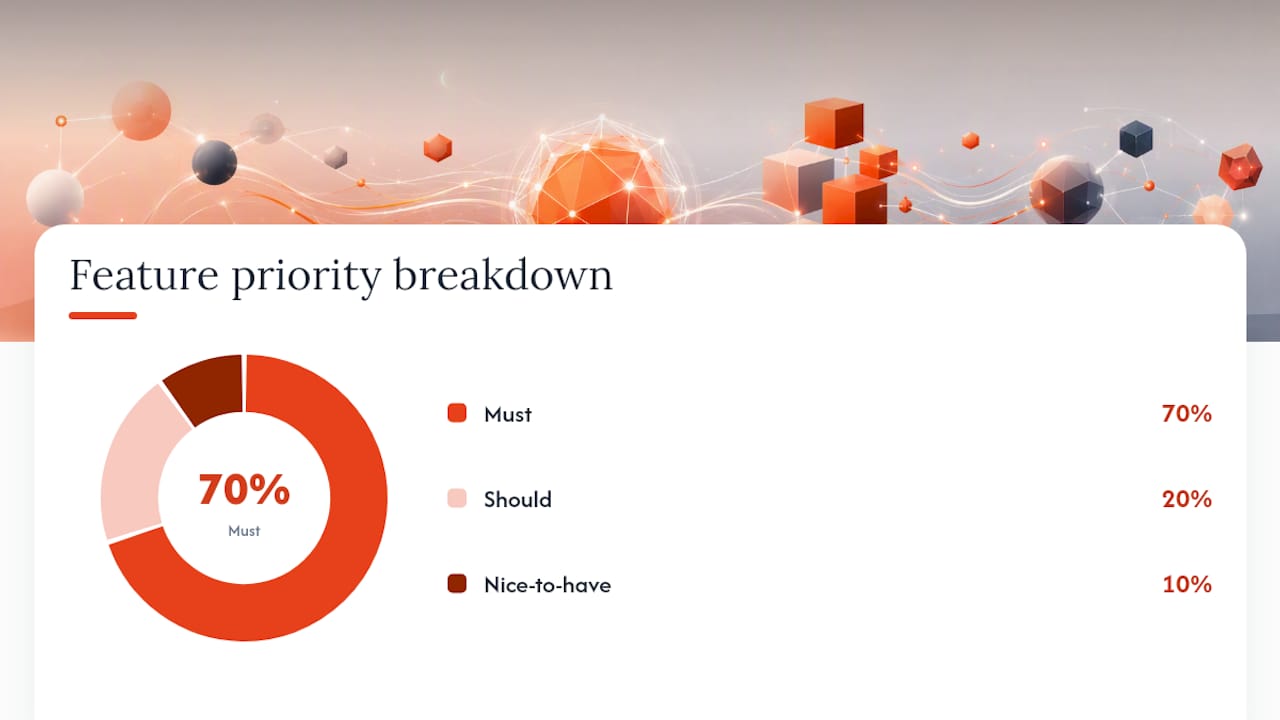
Use this table when scoring vendors. The priority labels reflect production risk, not preference.
| Feature | Priority | Notes |
|---|---|---|
| Real-time structured sessions with versioning | Must | Every draft iteration must be logged with decision context |
| Retrieval-grounded drafting (RAG) | Must | AI answers must be grounded in your corpus, not generic training data |
| Human-in-the-loop checkpoints | Must | Pricing, commercial terms, and go/no-bid decisions stay human |
| Exports to Jira, GitHub, or equivalent | Must | Plans must land in your existing workflow without manual copy-paste |
| Enterprise access controls and audit logs | Must | Required for compliance and post-deployment review |
| API and integration layer | Must | Enables connection to your existing data sources and tools |
| Data residency and privacy controls | Must | Non-negotiable for regulated industries or government contracts |
| Built-in expert marketplace | Should | On-demand human experts accelerate sessions where internal SMEs are unavailable |
| Templated interview flows | Should | Reduces session setup time for recurring project types |
| Per-session billing option | Nice | Useful for variable-volume teams or pilot budget management |
A note on RAG in procurement context: Retrieval-Augmented Generation means the AI pulls answers from your document corpus before generating text. Retrieval quality is the most common failure point in RFP automation pipelines. A vendor who cannot demo retrieval on your actual documents during evaluation is a risk.
How do you evaluate and choose the right platform?
Pricing models to budget for
Expect a mix of subscription tiers (monthly or annual per-seat or per-team fees), optional per-session expert payments, and usage-based costs for retrieval and embedding. A well-structured AI implementation RFP weights evaluation toward integration capability and data handling rather than price. Budget accordingly.
Questions to ask vendors and red flags to watch
Ask: "Can you run a retrieval demo on a sample of our past proposals?" Ask: "Show me the audit log for a session where a human overrode an AI draft." Ask: "What happens to our data if we cancel?"
Red flags: no structured discovery process before demo, vague answers on data residency, no human checkpoint guardrails in the workflow, and pricing that only makes sense at scale you haven't reached yet.
Pro Tip: Weight your scoring rubric at roughly 40% integration and data handling, 30% post-deployment ownership and support, 20% output quality, and 10% price. Teams that invert this and lead with price almost always regret it within six months.
How to run a controlled pilot in 60–90 days
Pilot phases
- Ingest (Days 11–20). Curate a corpus of past plans, proposals, or RFPs. Clean and structure them. Structured inputs materially improve AI output quality, so section-based formatting beats raw document dumps.
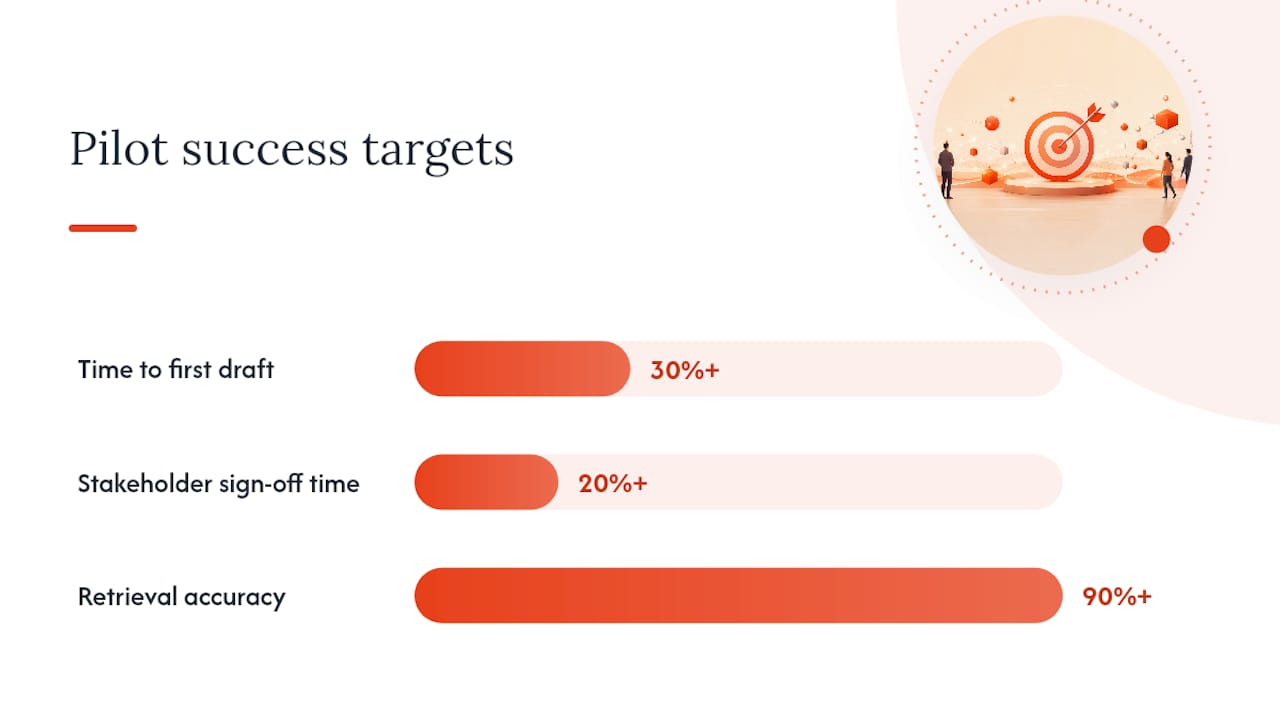
Pilot success metrics
| Metric | Baseline | Target | How to Measure |
|---|---|---|---|
| Time to first draft | Record current average | Reduce by 30%+ | Clock from brief received to draft delivered |
| Revision rounds | Record current average | Reduce by at least 1 round | Count stakeholder review cycles |
| Stakeholder sign-off time | Record current average | Reduce by 20%+ | Days from draft to approval |
| Retrieval accuracy | N/A | 90%+ grounded answers | SME spot-check sample of 20 outputs |
Governance guardrails: AI-drafted pricing, commercial terms, and legal language must be reviewed and approved by a human before any document exits the platform. Define a named approver before the pilot starts, not after.
Pro Tip: RFP responses and product strategy sessions produce the fastest pilot wins because they have high content reuse and a clear before/after metric. Avoid starting with a project type that has no historical documentation.
Where do these platforms deliver the most value?
The highest-ROI use cases share two traits: high reuse of past content and a measurable output (a document, a decision, a plan version).
- Buyer-side RFPs. Inputs: vendor requirements, evaluation criteria, past RFPs. AI drafts scope and requirements sections; humans own evaluation weights and commercial terms. Use a structured RFP workflow to keep sessions consistent.
- Proposal responses. Inputs: RFP document, past winning proposals, capability statements. AI drafts boilerplate and high-reuse answers; humans own pricing and go/no-bid decisions.
For your pilot, pick the use case with the most historical documentation and the clearest output metric.
How does Swarm-stack map to the procurement checklist?
Swarm-stack maps directly to the must-have feature set:
| Procurement Must-Have | Swarm-stack Feature |
|---|---|
| Real-time structured sessions with versioning | Session versioning with decision tracking built in |
| Human-in-the-loop checkpoints | SME and expert review steps within each session |
| Exports to Jira and GitHub | Direct export to both platforms, no manual transfer |
| Built-in expert marketplace | Vetted human experts available per session via Stripe |
| Invite-by-link stakeholder access | Single link invites; no account setup required for collaborators |
| Structured interview flows | Templated Swarm-style session flows for RFPs and roadmaps |
| Data privacy and trust controls | Documented on the trust and privacy page |
Swarm-stack's SwarmRFP flow is purpose-built for buyer-side RFP creation, combining AI specialist inputs with human expert review in a single versioned session. Teams that start there typically have a working first draft within one session.
How well does it integrate with your existing tools?
Integration depth is where many AI planning platforms fall short. The minimum viable integration for an enterprise team is bidirectional sync with your project management layer (Jira, GitHub, or equivalent), SSO for access control, and an API that lets your data team pull session outputs into your reporting stack.
Swarm-stack exports directly to Jira and GitHub, which removes the manual copy-paste step that typically introduces errors and breaks version control. For teams running procurement workflows, that export fidelity matters: a plan that lives only inside a planning tool is a plan that doesn't get executed.
Watch for platforms that offer "integration" as a Zapier workaround rather than a native connector. That distinction shows up fast when you're managing 20 concurrent sessions.
How do you get your team to actually use it?
The adoption gap is real. A platform your team doesn't trust or understand produces worse outcomes than a spreadsheet they do.
Start with a two-hour onboarding session focused on one workflow, not the full feature set. Assign a session owner for each pilot project, someone accountable for running the session and reviewing AI outputs before they circulate. That role clarity reduces anxiety about "who's responsible if the AI gets it wrong."
Change management for AI planning tools follows a predictable pattern: early adopters run the pilot, skeptics watch the first output, and the majority converts when they see a real deliverable that saved someone two days of work. Build that first visible win into your pilot plan deliberately. The B2B AI SaaS pilot guidance from Swarm-stack covers this adoption curve in practical terms.
What's coming next in AI planning platforms?
Three trends are worth tracking for procurement teams planning 18-month roadmaps.
Agentic session orchestration is moving from experimental to production-ready. Instead of a human running a session manually, an AI agent coordinates the session flow, routes questions to the right specialist, and flags when a human checkpoint is required. The human role shifts from facilitator to approver.
Tighter corpus ownership models are emerging as a competitive differentiator. Teams that treat their past proposals and project plans as curated assets, rather than archived files, will see compounding returns as retrieval quality improves. Platforms that give you full ownership and portability of your ingested corpus will matter more as switching costs rise.
Compliance-aware drafting is becoming a standard feature request, particularly in government contracting and regulated industries. Expect platforms to add clause libraries, regulatory citation grounding, and compliance flag triggers within the next 12–18 months.
Why the "best tool" question misses the point
Most teams evaluating AI planning platforms spend 80% of their time comparing feature matrices and 20% on their data readiness. That ratio should be reversed.
The platforms that deliver real value aren't necessarily the ones with the most features. They're the ones your team will actually run sessions in, with a corpus clean enough to produce grounded outputs, and governance clear enough that someone owns every AI-drafted line before it ships.
The pilot-first approach isn't a hedge. It's the fastest path to a defensible business case, because it forces you to answer the data question before you've committed budget to a platform that can't use what you have.
Human-in-the-loop isn't a limitation of current AI. It's the correct architecture for any document that carries commercial or legal weight. A platform that tries to remove that checkpoint is solving the wrong problem.
Swarm-stack gives your team a working first draft, not a demo
Faster first drafts on RFPs and roadmaps aren't a feature promise from Swarm-stack. They're the direct result of running a structured session with your corpus, your stakeholders, and vetted human experts in the same workflow. No agency retainer, no months-long implementation, and no lock-in before you've seen a real output.
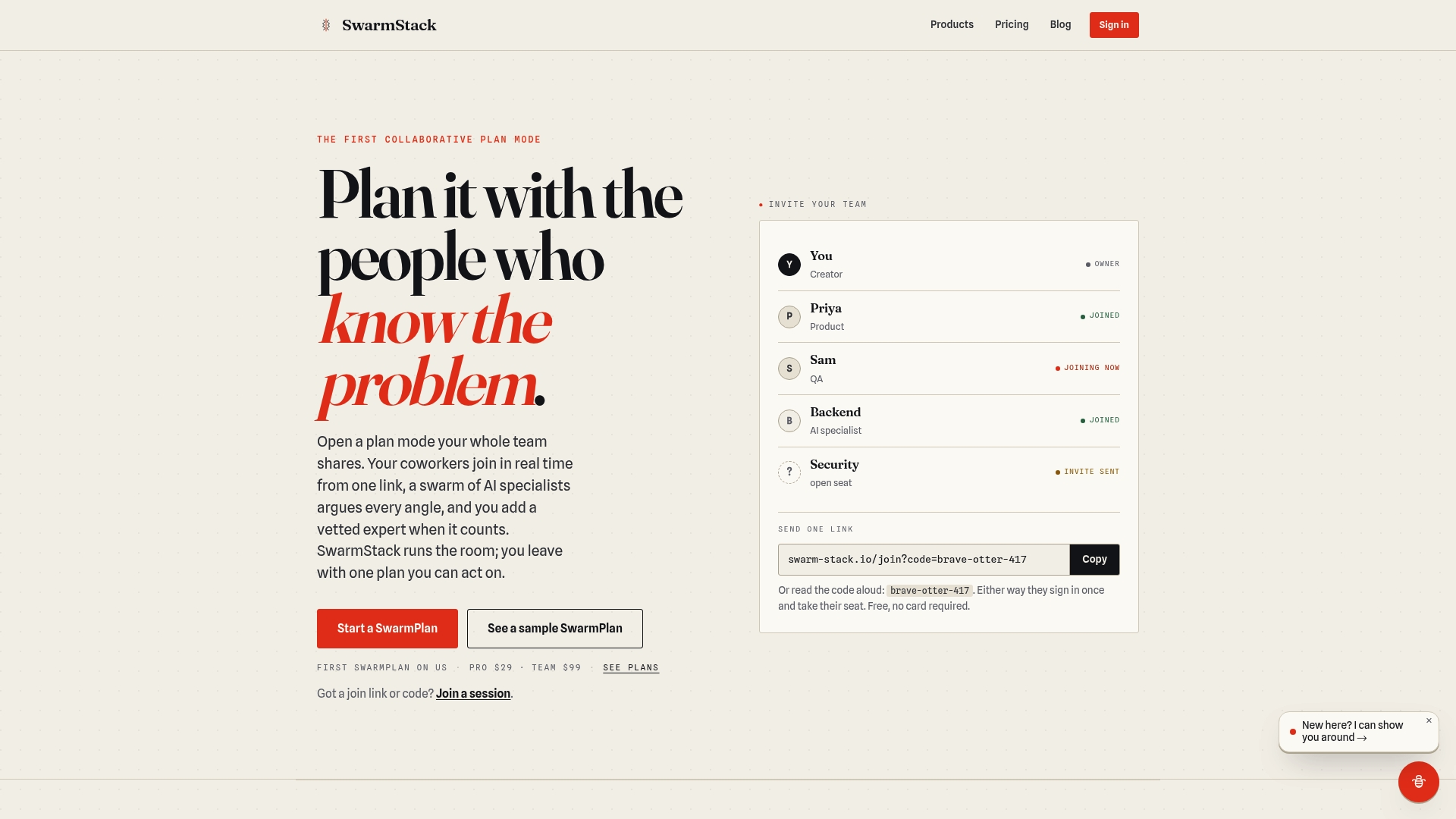
The free tier lets you run your first session with your own AI API key, invite stakeholders via a single link, and export the versioned plan directly to Jira or GitHub. The SwarmPlan and SwarmRFP flows are built for exactly the pilot scope described in this article. Start your first session at swarm-stack.io and have a working draft before your next stakeholder meeting.
Useful sources
- Project Planning with AI: A Step-By-Step Guide - Monograph
- AI Proposal and RFP Automation: A Sane Agent Playbook
- How to Write an AI Implementation RFP That Gets Serious Responses | AITENCY
- AI-Generated Project Charters: Step-by-Step Guide – Project Management Formula
- AI Project Management Tools for B2B Teams: 2026 Guide · SwarmStack